




Let’s Go Outside
Unlike many people who find interest in images and photography through exhibitions, I barely visited any of them in my childhood―my parents weren't museum or gallery types at all. I think the first time I entered a museum was when I was in primary school, but I honestly can’t recall. Instead, something that I do remember well was my bus ride to school. I would spend the whole forty-five minute ride looking out at the billboards that were along the boulevards of my hometown. Their imagery was yellowed by smog and half covered by traffic, but nevertheless I sensed that in them there was something underneath, something unspoken, and something that attracted and repelled me at the same time. I learned to read photographs like this: sitting on a bus and seeing them pass me by, fast, elusive, and clear only in appearance―my fascination with images was born that way.
While working with both photography and exhibition making over the past seven years, I often try to recall this memory as it prompts me to remember that what matters is not only the work that is being exhibited, but also the public who will receive it. I like to think that the primary task for curators is not merely to take care of the artists but to take care of the audience; after all, curators are the ones who provide access to an artists’ work, in both a spatial and dialogic narrative. We all know that it can be easy to take care of the audience subset of practitioners and arts alumni, who are aware of the dynamics that underpin the constantly evolving language of photography; but this can prove to be a challenge for curators when they encounter the general public. As cultural workers, our responsibility is to transmit the art to those people that do not always have the elements to understand the context, the meaning of the work or the hidden and external subtexts.
Since the beginning of my professional path, I have always believed that photography festivals could be the right place to achieve the goal of making lens-based projects more accessible and easy for audiences to grasp and engage with. As opposed to museum and gallery exhibitions that are often mistakenly seen as inaccessible places reserved for a few proselytes, festivals are supposed to be a type of event less institutionalised and free from social barriers. Furthermore, a festival often develops throughout the city, enveloping places that are frequented by local residents, creating the potential to establish a horizontal conversation with the community it finds itself situated in. But is this really the case?
Over the past fifteen years, photography festivals have sprung up like mushrooms―in Europe alone there are more than 100 medium-sized ones. Almost all of them follow the example of the French festival Les Rencontres d’Arles, the first festival in the medium’s history. Founded in 1970, Les Rencontres coincided with the wide-ranging driving force in the art world that conceived art events as laboratories where artists could meet and take inspiration from each other. The festival devised independent opportunities to showcase artworks outside the institutional framework and therefore became a breakthrough event because of its innovative ideas to bring photography to the city: at the time of its inception, exhibitions began to be located not only in galleries, but also in less conventional places such as old warehouses or chapels that were usually closed to the public―even today this is an approach echoed by many other festivals around the world.
We can say that the premise of photographic festivals is commonly understood to be a meeting place to showcase unseen projects, discover talents, and be informed about the latest photographic trends. Being events that are dedicated to insiders of the photo industry― be they photographers, curators, photo editors or journalists―they aim to build a platform to generate an exchange and gather together the medium’s actors as a family. Ultimately, these aspects are common to all types of festivals, which are places that “bring together significant numbers of cultural practitioners, all sections of the production cycle and, therefore, act as hubs in cultural economy networks that provide practitioners with professional development prospects that are otherwise hard to find outside major cities”.1 However, if festivals were conceived and considered to be these unmissable annual events because they provided an update on the status of photography―due to their independent and experimental quality of response―then today, in a hyper-connected and immediate art world, this initial rationale doesn’t seem to be the same.
In 2017, the Dutch curator Hester Keijser, in her uplifting Manifesto for Future European Photo Festivals, stated that festivals “often lack vital urgency and relevance regarding the topics that need addressing in and about photography, and instead rarely do more than confirm the status quo of the industry”.2 She brings to the table a disarming truth: festivals are often “large, friendly
social gatherings for and by people who tend to profile themselves as being liberal or progressive, but who are usually politically quite harmless and maybe more parochial than they would be prepared to admit”.3
Furthermore, today photography- related news circulates fast and easily on social media, and thanks to these virtual platforms photographers no longer have to wait for the choice of a curator to make their work public. In June 2020 Grant Scott, the founder and curator of the United Nations of Photography (an online platform dedicated to photography criticism) highlighted how the growth of online initiatives, born during the pandemic in the spring of 2020, expanded the discussion about the status of photography more so than has previously been accomplished by festivals.
A few months later he stated in his article A Suggestion for Photo Festivals that “over the last few months we have been presented with a veritable pick n mix of creative approaches, genres, practices and voices”.4 He continued to say “these are available to all, globally, and break the narrow confines of the curated photo festival structure bound by one person or a board’s aesthetic tastes. The work promoted directly through self-initiated events over the past months is not restricted by a theme or a geographic location requiring travel, accommodation and the expense that comes with both of these additional costs to attending the festival itself”.5
In spite of these considerations, after fifty years since Lucien Clergue, Michel Tournier, and Jean-Maurice Rouquette founded Les Rencontres d’Arles, we can’t pretend that a lot has changed in festivals’ configuration. Hence, today, it is legitimate to ask: can photography festivals still be considered that unmissable appointment for practitioners? And if they are unmissable, unmissable for what? Each year I hear more and more people commenting that “this year I can’t go there, it doesn’t matter, it will be there next time”, as if these events were not, in the end, truly unmissable. Due to the increasing proliferation of online mediums, we can now stay up to date with the latest developments and trends in photography without even visiting the countless events or seeing the annual artistic compilations.
Being aware of the difficulties in organising such an event, from my own personal and professional experiences of working in them, I feel that it is important for festivals to review the assumptions within which they have historically been born and developed. As insiders and attendees, we no longer need to attend festivals in order to be knowledgeable about the developments in modern-day photography. At the same time, festivals cannot merely be moments of encountering and celebrating photography without any attention to the broader context of their creation, nor can they solely speak to practitioners. I know this is a pretty strong statement, but they must evolve and adapt if they are to survive. As Grant Scott asserts, it is time for festivals “to rethink the methods in which we connect with those who are currently not attending talks, festivals and exhibitions”.6
This is the reason why I started this article by reciting my childhood memories: a young girl who observed the photographs printed on billboards, faded by time but inserted into a real-life context. There are people who, would never cross the threshold of a gallery, but who are every day confronted with countless images in a myriad of different styles and formats that go unnoticed: it is precisely these overlooked images that shape our ways of thinking and seeing the world. What if the aim of photo festivals would be to turn their focus to those people and engage them directly in a conversation by bringing photography to them?
Learning from the Pioneers of Open-Air Exhibitions
Using public spaces as an exhibition display is historically considered a way to reach broader audiences: it can peel away the filters that complicate the understanding of the art and it can reinforce its condition as a language accessible to anyone. Additionally, outdoor installations allow for a dialogue to start with the community in which the festival is hosted, according to the theory by Lars Willumeit who claims that exhibiting is not an end in itself, but rather an opening for something.7
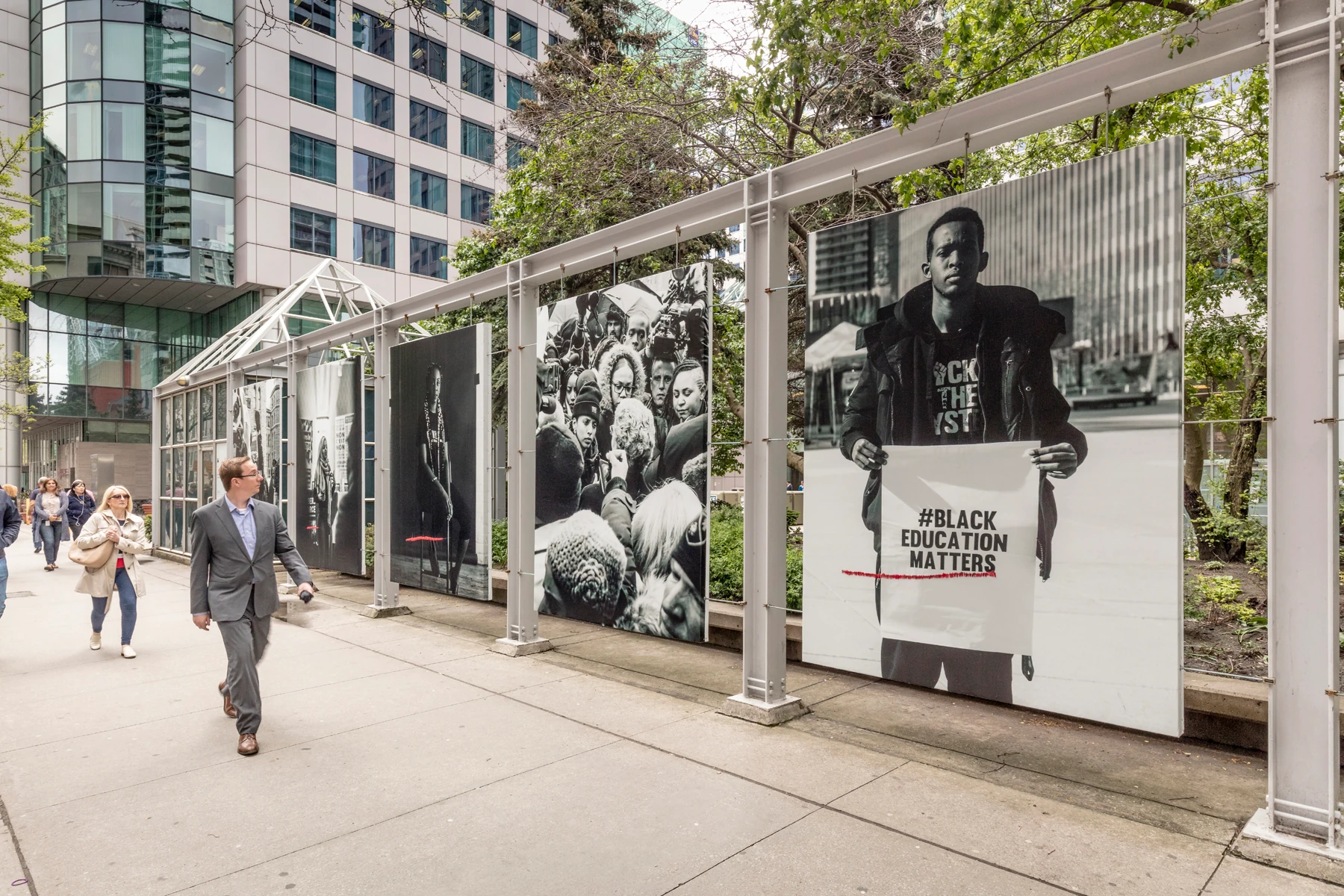
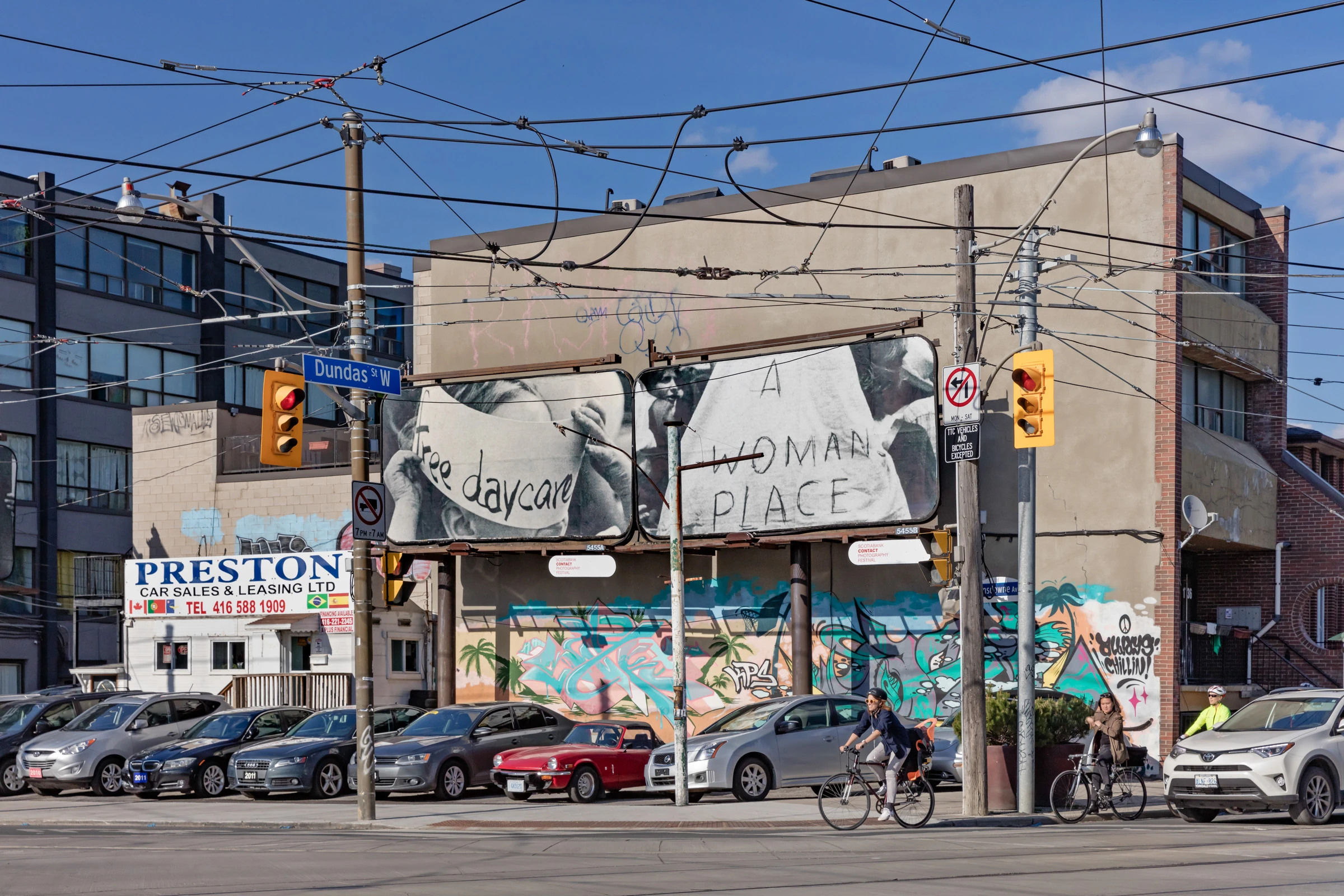
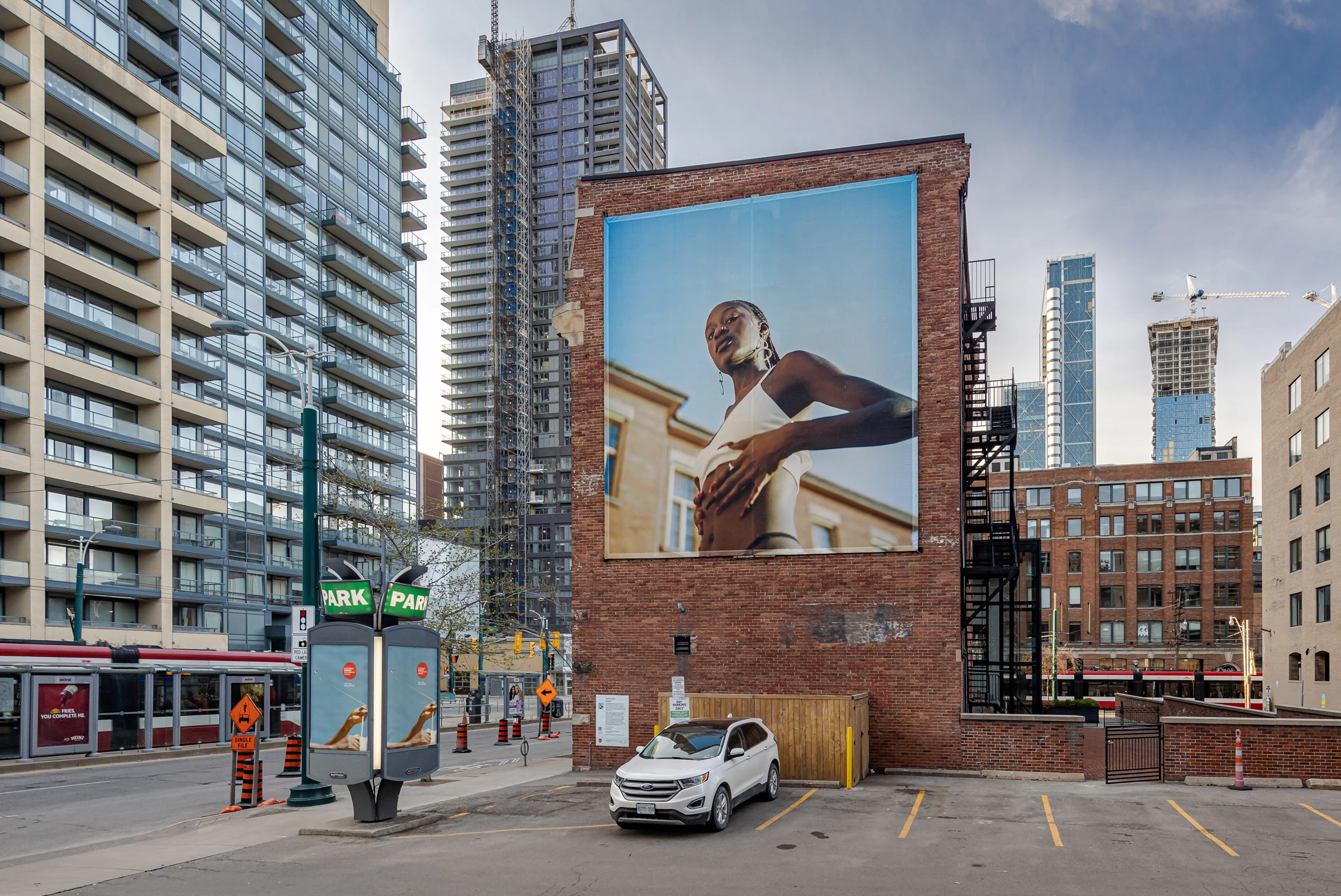
Naturally, photography festivals employing open-air exhibitions is not a new concept: there are a number of them that have integrated the practice of public space display as their main format for many years. One example is The Scotiabank CONTACT Photography Festival in Toronto, Canada. Each May sees a month-long celebration of contemporary photography that, alongside more conventional places like museums and galleries, can be visited for free in atypical locations like parks, billboards, bus shelters, and walls in underground subway stations. Since its inception in 1996 the festival has exhibited over 1,000 local, national, and international photographers at more than 200 venues.
To get a clearer view of the behind-the-scenes of this festival, I spoke with the executive director Darcy Killeen. We discussed the impact that their open-air exhibitions have had on their audience, with Killeen highlighting that, in regards to exhibitions installed in subway stations, each year they make a massive investment to put up 17 images in a space where people stand for a maximum of three minutes. “Usually people are running down the stairs or standing there while they’re going to get to work or to school; they’re not really focused on what is around them”, affirms Killeen. “One year, we were exhibiting the work of James Mollison and I spent a day just standing there looking at people’s reactions, because I wanted to understand what kind of impact this could have on people’s lives. I was amazed to see how people would walk down, all grumpy and frustrated or stressed out from their thoughts, and all of a sudden you could just see a little smile on their face because they realised that instead of the Pepsi advertisement there were pictures of these young orphaned apes and orangutans. They couldn’t figure out why. And then they just started a discussion commenting on it and it really engaged them. It brought artwork to them in an unexpected way. In that moment I totally saw the purpose and the reason for doing it”.
Killeen also explains that outdoor installations allow the festival to reach a much bigger audience than indoor exhibitions, which are also included in the programme. “We have 1.4 million visitors that go to our indoor exhibitions annually and we know that we have over 175 million people who walk by the outdoor artwork. Thus the visibility increases by 100-fold by putting it outside”. This large audience is also a potential consumer base for the festival’s funders and sponsors, shown by Scotiabank, the title sponsor of the festival for twelve years, who has been a central force in the growth of the festival.
Another example of a photo festival primarily based on outdoor exhibitions, is the biennial festival Images Vevey, taking place in Switzerland. When Stefano Stoll, the festival’s director since 2008, was asked to renew the very canonical format of the already existing festival, it seemed natural for him to take the original motto of the town, “Vevey City of Images”, as a starting point. This slogan was initially created in the 1990s by the local authorities in Vaud Riviera as a way to highlight the businesses and institutions related to image and visual communication. In order to stand out from the panorama of European events dedicated to photography, Stoll decided right from the start to install the festival throughout the city and design most of all the exhibitions in the public space. This involved occupying the city with large, eye-catching installations on building facades, along the river bank (sometimes even going underwater), and in squares and parks where children play and families meet. Still to this day, one of Images Vevey’s core intentions is to create “a gift to the locals” and provide visual experiences for the visitors”, in Stoll’s words. For this reason, all the installations are designed by the exhibition team in order to create a physical and sensory interaction with the audience, reminding me of a phrase from El Lissitzky that says “space does not exist only for the eyes, one wants to live in it”.8
Today, also thanks to the decorative appeal of its exhibitions, Images Vevey is renowned globally, but at the beginning the idea of exhibiting in public spaces was not an easy sell to the international circle of photo professionals. “At first, many of my fellow curators, photographers and museum directors told me that it wouldn’t work because when it came to exhibitions, photographers were more interested in good paper, the right light, the right frame, and the like”, Stoll explains. “Printing images on materials that could not guarantee the quality of colour and definition, such as fine art, was unthinkable. Instead, it all went differently. It was very well received by many artists who began to find that it was worth thinking differently about the use of their projects, reflecting on the interaction with the general public―the public that does not usually go to museums”.
Like Darcy Killeen from the CONTACT Festival, Stoll also spends time at exhibition sites studying the reactions of the public. “I want to see what the impact of an image really is on people. How do people react when they see it, what do they take home? I hope to offer an extraordinary visual experience that changes (even just a little) the way people see the world. Many criticise me because they say that I never exhibit definitive politically or socially-concerned projects, but I think that when it comes to public spaces, it takes a lot of respect to bring messages to people. They need to be understandable messages, with images that people can understand easily. I have to find that balance between socially-committed themes and seducing ways of displaying them”.
The issue of cognitive accessibility, as alluded to by Stoll, is a crucial point when it comes to open-air exhibitions, but there is also another equally important aspect. “The image you exhibit outdoors can encounter five thousand unique biographies a day. Everyone brings their own experience when reading an image and we must have the curatorial honesty to admit to ourselves what is the impact we want to achieve. Do we want to incite shock, displaying projects that are very strong and understandable only by those with a cultural background, or do we want to meet the public, finding a way to make some issues accessible to all?” Stoll questions, perhaps pointing to a type of self-referential curatorship to which we are all familiar. “The only way I can imagine doing the festival is in dialogue with the Vevey community: the people who live there, who work there, and who take their children to school every day. These are the people I want the exhibits to talk to. If you don’t build a dialogue with the locals, there is no point in organising a festival. You use the money of the locals, you use their streets, their gardens, you use their daily life. They must be the first ambassadors of the event, the first to be convinced that the festival is needed in the city”.
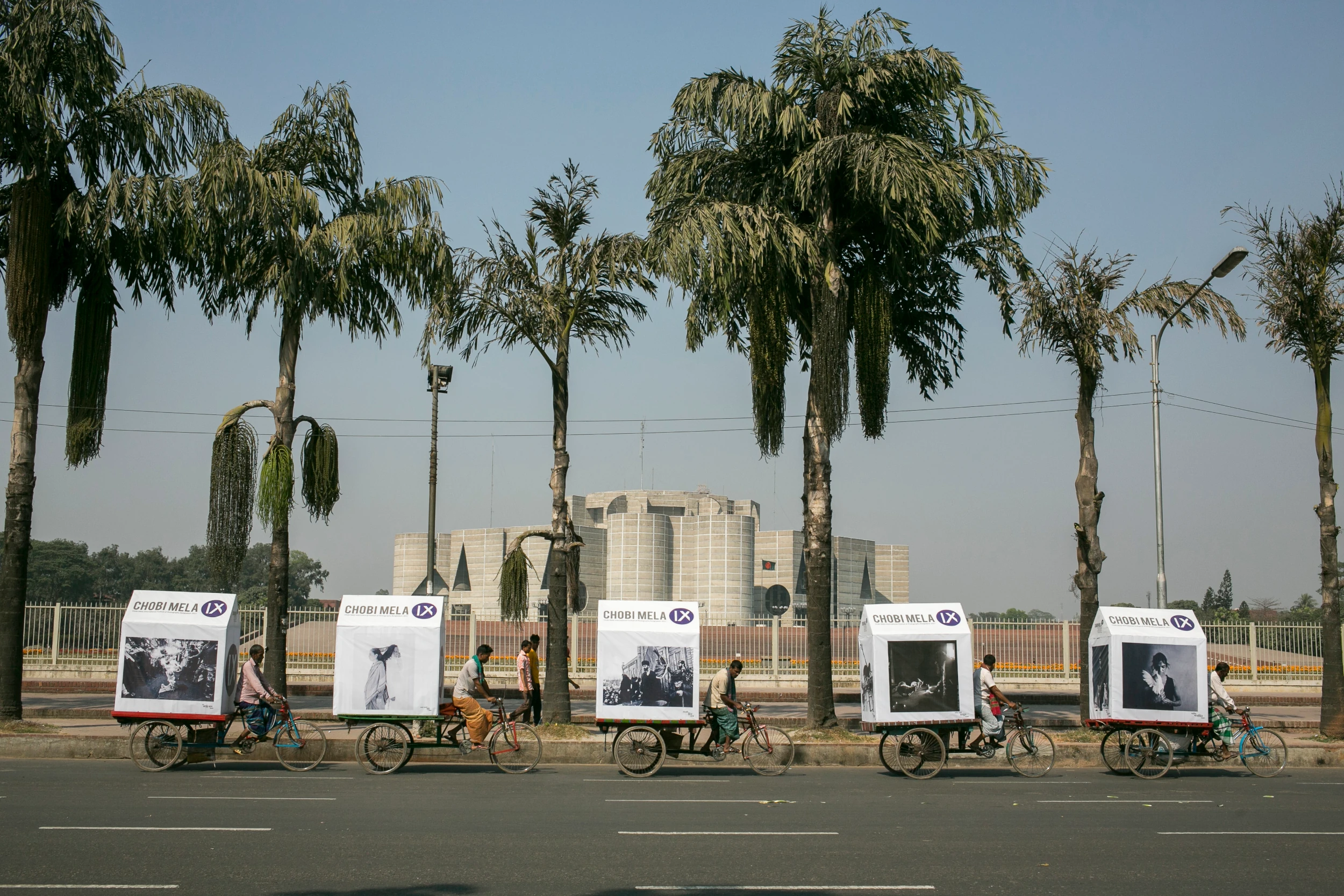
The International Festival of Photography Chobi Mela in Dhaka, Bangladesh, also demonstrates the benefits and utility of exhibiting outside. Since its inception in 2000, by founder Shahidul Alam, it is known for its commitment to creating an inclusive and educational event both for image-makers and the local community. Currently run by the Drik Picture Library and the Pathshala South Asian Media Institute, the leading photography school in South Asia, over the years Chobi Mela has become a global platform that brings the world to Bangladesh (as opposed to taking Bangladeshi photographers to global festivals). It has been a forum for regional concerns and critical artistic practices, creating the conditions to rethink collaborative regional platforms. This approach resulted in a strong, inclusive policy that ensured access for the general public, giving birth to the trademark of the festival: ‘mobile exhibitions on rickshaw vans’. These vans allow the festival to reach remote areas directing its attention to people who typically do not go to exhibitions, and who rarely travel to other areas of the city.
“I initiated this format sixteen years ago”, explains ASM Rezaur Rahman, the general manager at Drik Picture Library Ltd and curator of Chobi Mela. “I took eight or ten rickshaw vans, which are very popular in Dhaka, and put an exhibition on the top of each one and drove them to Dhaka City. We do it for every edition of the festival, but our journey into the city is never random. We have actually researched the places that, in our opinion, mostly need us: places where people don’t go to exhibitions, or where they can’t. We send the entire convoy to those remote locations and it is fantastic because you can see how this fits into the everyday life of people with absolute naturalness: women take their kids and
come out of the house to see what is happening or people just stop on the street... People love the idea that they don’t have to go to the festival but that it is the festival going to them”.
Rezaur also told me how the festival is strongly experienced by the locals, who eagerly await the announcement of the programme each edition. This is probably due to Chobi Mela being born not just as a festival for the industry, but more for the community around it. “Through photography we want to create awareness. This is a tool of change for us: we work with social stigmas and many different issues that people usually don’t talk about either because they are intimidated by the strict rules of the censorship we experience in Bangladesh. The festival helps us to open up about these distressing themes: therefore, the idea of a festival for us really goes beyond that of entertainment or industry representation. Chobi Mela is made for the people living in Bangladesh and experiencing specific socio-political conditions very different from those of the West”.


Unboxing the Challenge of Accessibility
What these festivals have in common is their determination to engage in a dialogue with the locals and to involve audiences not accustomed to participating in cultural environments through an accessible approach. However, the term ‘accessibility’ not only translates into the dismantling of the superstructures that determine the canonical reception of the art work, but can also refer to the physical and practical conditions that influence the fruition of the artworks and installations.
Whether they are architectural barriers or impediments due to the unfavourable geography, photography festivals that want to exhibit through open-air exhibitions are called to face the dilemma regarding issues around physical accessibility. Unfortunately this is a highly neglected topic in the organisation of all photo festivals (not only open-air focused events) for various reasons. One being that festivals are often short-term events produced with modest budgets that don’t allow programmers to provide adequate accessibility in all the locations where the exhibitions are held― oftentimes old buildings with very inaccessible design. The other reason being the teams that are often composed of a few permanent people and a large circle of freelancers or volunteers, who are reasonably more focused on learning the internal dynamics of the world of photography or creating a network than on paying attention to the different accessibility-related needs of the audience.
“When it comes to photo festivals and the notion of accessibility, you need quick, good and cheap solutions: easy to implement and to use”, states Moritz Neumüller, the founding director of ArteConTacto, a project to make art and culture accessible to all, and an experienced festival curator himself. But, how can these quick, good and cheap solutions co-exist? “There are some things that are easy to do, for example to hang the pictures a bit lower so that people in a wheelchair or children can also see them”, Moritz continues. “Or instead of a real-guided audio tour with a speaker, you can do it with a pre-recorded electronic voice. Or again, when you print texts they should be big enough so that visually impaired or elderly people can read it well―you could also use a QR code to make an audio reading of the text available”.
There is an infinite possibility of solutions that can be adopted to make installations more inclusive. However, one of the important prerequisites for doing so is to design these solutions in dialogue with those directly involved and to avoid devising unlikely and sterile scenarios (which often result in projects having no concrete feedback from the people they wish to address). As Moritz explains, “The big problem is that organisations that are interested in these kinds of activities very often try to reinvent the wheel and have these wonderful ideas that want to be the most innovative and disruptive. When you approach accessibility design, you should first talk with the people. You could invite children, teenagers, seniors and people with disabilities to become part of your festival; even just establishing a sort of advisory board made up of people of the community is helpful. It will cost you the budget to have some cookies and coffee for an afternoon to talk about how they would love to be represented or what they would like to see in the exhibitions. It is quite easy to know what people need if you ask them”.
Being physically accessible also means considering routes to exhibition sites that do not include obstacles and designing wayfinding signs that take into account the different types of impairments that may exist―especially for urban landscapes. These exhibition routes are a very important issue to consider especially in regards to transportation and the environmental sustainability of a festival: How can the event be reached? And by what means of transport?
Currently addressing these questions and problems is the Alt.1000+ Festival, an event in the Neuchâtel mountains, in Switzerland, curated by Nathalie Herschdorfer until 2021. The work of contemporary artists is installed in harmony with the surrounding landscape, and the exhibitions are often the result of artistic residencies and commissions made on site. But since the festival is located at an altitude of 1,000 metres it is difficult to access it by any other means than a car. For this reason, the festival’s organisers are currently finding ways to ensure that the exhibition sites are reachable by festival-goers in an accessible and sustainable way in the near future. Finding a solution to this issue would allow the intention and location of the art to be enjoyed by everyone, as the exhibitions are specifically created and displayed in accordance to their nature-inspired surroundings.
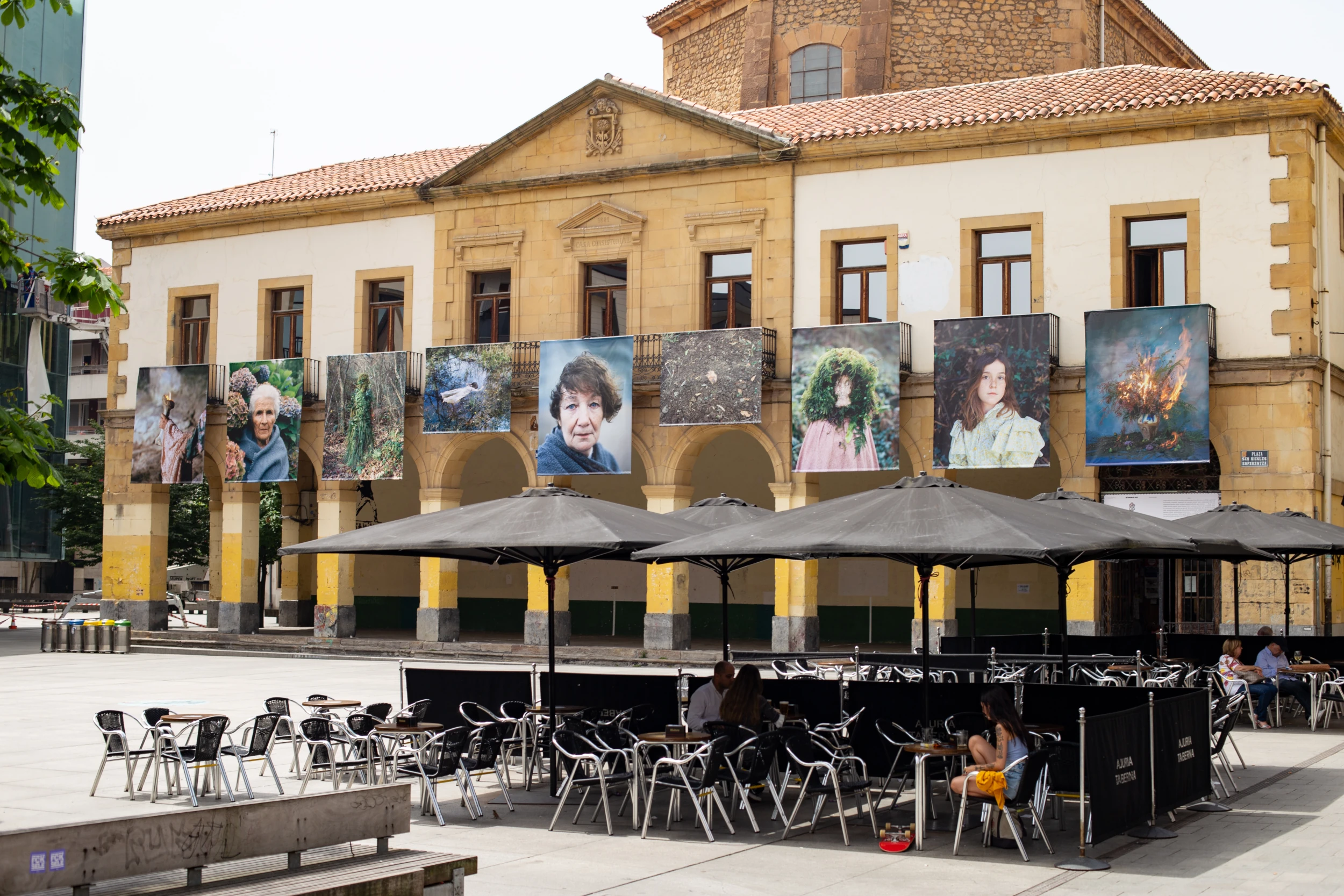
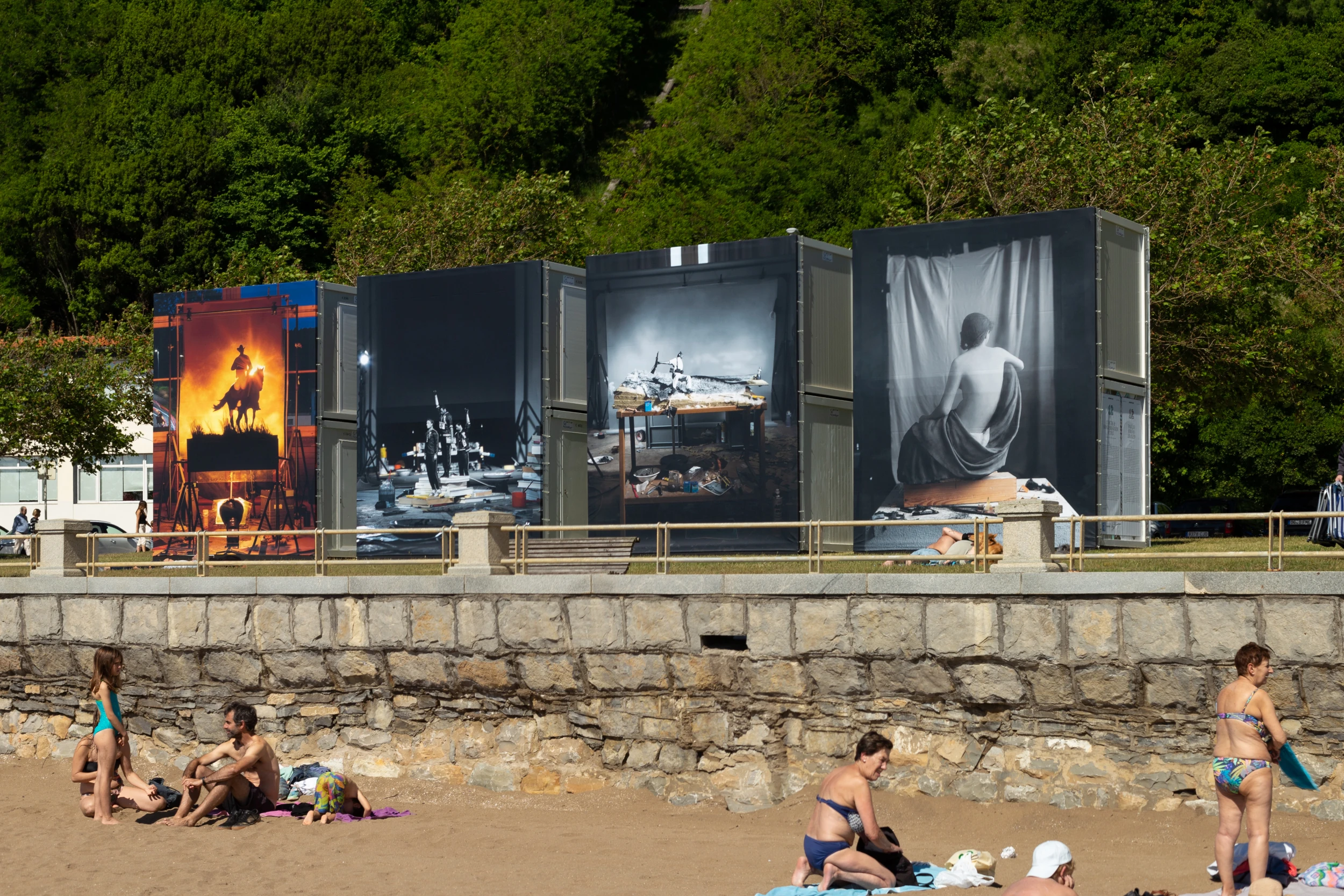
On a similar note, Getxo Photo, a photography festival created and managed by cultural organisation Begihandi in Getxo, Basque Country, has, under the leadership of artistic director Jon Uriarte, joined the Basque Government programme to minimise the negative environmental impacts of its events. This program helps to incorporate sustainable objectives and actions, such as promoting the use of public transport and bicycles to reach the exhibitions, prioritising the use of the train as a means of transport for invited guests.
Beyond the Spectacle Effect
One of the greatest decisions to be conscious of when opting for lens-based open- air exhibitions is creating installations that regard audience interactions above aesthetic considerations. When viewing scenographic installations, which at times seem more interesting if observed through a documented photo than in real life, one wonders from what point of view were the installations designed. Is it the one of the visitor or that of a lens that documents the existence of the exhibit? Is a photogenic installation, or record of the exhibition posted on Instagram or on a website, more important than the learning opportunity experienced by the participants?
What should be avoided in such cases is the viewer used as a prop, a decorative element of the installation view. Brian O’Doherty’s remarkable phrase, even though referring to exhibition displays in the so-called “white cube”, seems to taunt this tendency. In 1986 in his book Inside the White Cube, he catechised “Who is this Spectator? Also called the Viewer. Sometimes the Observer, occasionally the Perceiver. It has no face, is mostly a back”.9 In light of these considerations, next to the positiveaspects of exhibiting photographs in public spaces, lies a question: Where does the real cultural experience end and where does the spectacularisation of art begin?
Looking for an answer to this challenging question, I can’t help but think of London-based Australian artist, writer and educator Anthony Luvera’s practice, who is often referred to as a socially-engaged artist. His most recent project, Agency, was a body of work created in collaboration with people who have experienced homelessness in Coventry, UK. It was commissioned by the Coventry, UK City of Culture, supported by GRAIN Projects, and took part as an outdoor installation in the event HOME: Arts and Homelessness Festival in October 2021. Throughout the past year, Luvera invited participants to take pictures documenting their experiences, highlighting places in the city that are significant to them, or depicting themselves through self-portraiture. These final images were exhibited along Warwick Row (known for having an abundance of real-estate agencies along the street), with an installation that was modest overall but had a great impact on the city. The display involved a series of signs lined up and driven into the ground, that recall those of real-estate agents.
When it comes to exhibiting his projects, Luvera primarily seeks to present his work in the public realm. “It seems to me that galleries and cultural institutional spaces mostly speak to middle-class, educated, often mostly white people who are generally liberal in their political affiliation and are somehow already aware of social issues”, he explains to me. “Working with people whose life experiences embody a particular social issue, it has always prompted me to think very carefully about who the audiences are for the work that I make. So I ask myself: who are we communicating to? And how can we do it?” By exhibiting in public spaces, Luvera achieves to reach people he wants to talk with. “At the same time, presenting work in the public realm is somehow an imposition on the people that live and pass through that space. Sometimes organisations or institutions just appear to go for the spectacle of the image, making things very large and amplifying the aesthetics of the image alluding to the kind of tropes used in advertising. This approach can be very impactful with no doubt, but I think that putting oversized images out in the public space isn't enough”.
In fact, the exhibition display of Agency was modest and without frills: no scenographic enlargements, and no artistic pretensions that went beyond the social impact of the project. Luvera opens up about this choice saying that “The way in which those images are situated in the context need to be carefully fine-tuned, however it shouldn’t stop there. Exhibiting images outside along the streets is only one part of the work that needs to be done. Working in the public realm is about not only reaching a great number of people, but it is also about communicating with those who may not ordinarily cross the threshold of a gallery”. According to Luvera, in order to achieve this, you need to broaden public engagement with events that enrich the exhibition experience. One approach is to host events and public discussions, especially with the policymakers and CEOs of organisations. “There are a number of different ways of designing public engagement programmes aimed at building conversations with audiences. They can be very targeted and can also try to bring together multiple perspectives, in order to avoid solely communicating with people who all share a similar or the same opinion”.
Having an exchange between the general public and organisers, where opinions and backgrounds are not levelled, can in fact lead to enrichment on both sides. The feedback that a photo festival may receive from a totally disinterested audience is genuine, unfiltered, and shameless. Likewise, artists can find a new way of conceiving their work in relation to the space and the people who inhabit it by exhibiting outdoors.
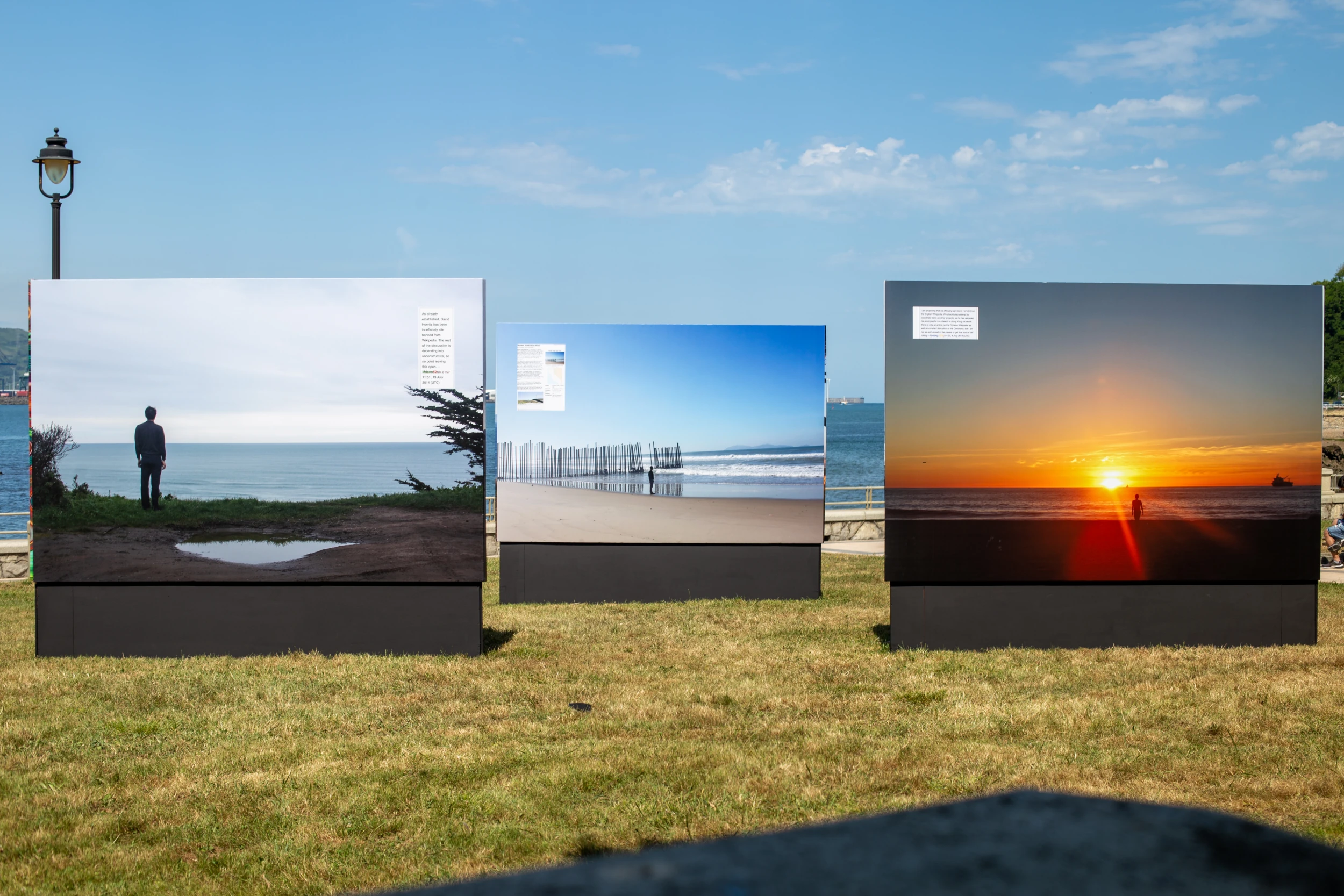
Considering Luvera’s case is important for understanding how exhibiting in the public space does not simply mean providing a different visiting experience, but more importantly it should seek a genuine dialogue within the community by creating joint projects that may contribute to the growth and social well-being of its citizens. In other words, his practice shows how an open-air exhibition must rely not only on the scenographic effect but also on the process behind the installation, proving that “when public art works with both its social and aesthetic surroundings, the results can be both convivial and powerful”.10

Conclusion
Implementing open-air exhibitions in festival programmes is challenging, but something that should be seriously considered by organisations who want to revise and reshape their role in the cultural ecosystem. On the other hand, the public space can’t merely be conceived as a museum without walls that strives only for amazed upward glances or decorative elements added to an urban landscape. Instead, it has to be thought of as a space for discussion where every passerby, be it an intentional or a casual visitor, can familiarise themselves with the contemporary complexities that the image presents, aspiring to a notion of universal access to visual education and literacy.
Of course, I do not argue that all photo festivals should from now on exclusively install outdoor exhibitions, rather that it is worth
considering these as a valuable alternative. Indeed, not all photographic works are suitable for exhibition in the public space, for instance due to the visual complexity of the project, the theme it addresses, or the narrative development it may require where curatorial discretion is necessary. In this regard, it is worth remembering that “the role and the content of the photographs depends on the way we access them”.11
By offering “free and meaningful cultural experiences that underpin the circulation and production of knowledge”,12 public art
acknowledges the accessible character of the image, and it liberates art organisations from speaking exclusively to a specialised art-savvy audiences.
All of us, ambitious curators and artists, are often tempted to make things more complicated than they are, but we cannot forget
that what we do may eventually be consumed by a variety of audiences. In our practice as cultural workers, when planning and curating an exhibition we cannot ignore that it will be experienced by any kind of people: who take the subway or cross the neighbourhood to go to work, dog walkers in a park, or the teenagers who make videos on the streets to post on TikTok. And, ultimately, by a little girl who observes billboard images from behind the bus window, remaining hopelessly fascinated by them.
If the “choices made for exhibition spaces are not neutral”,13 then open-air photo exhibitions can be that non-neutrality we need to take a risk for. They can give people the chance to encounter images in a familiar, challenging, and significant way, through which perhaps they will learn something new about themselves and the society in which they live.
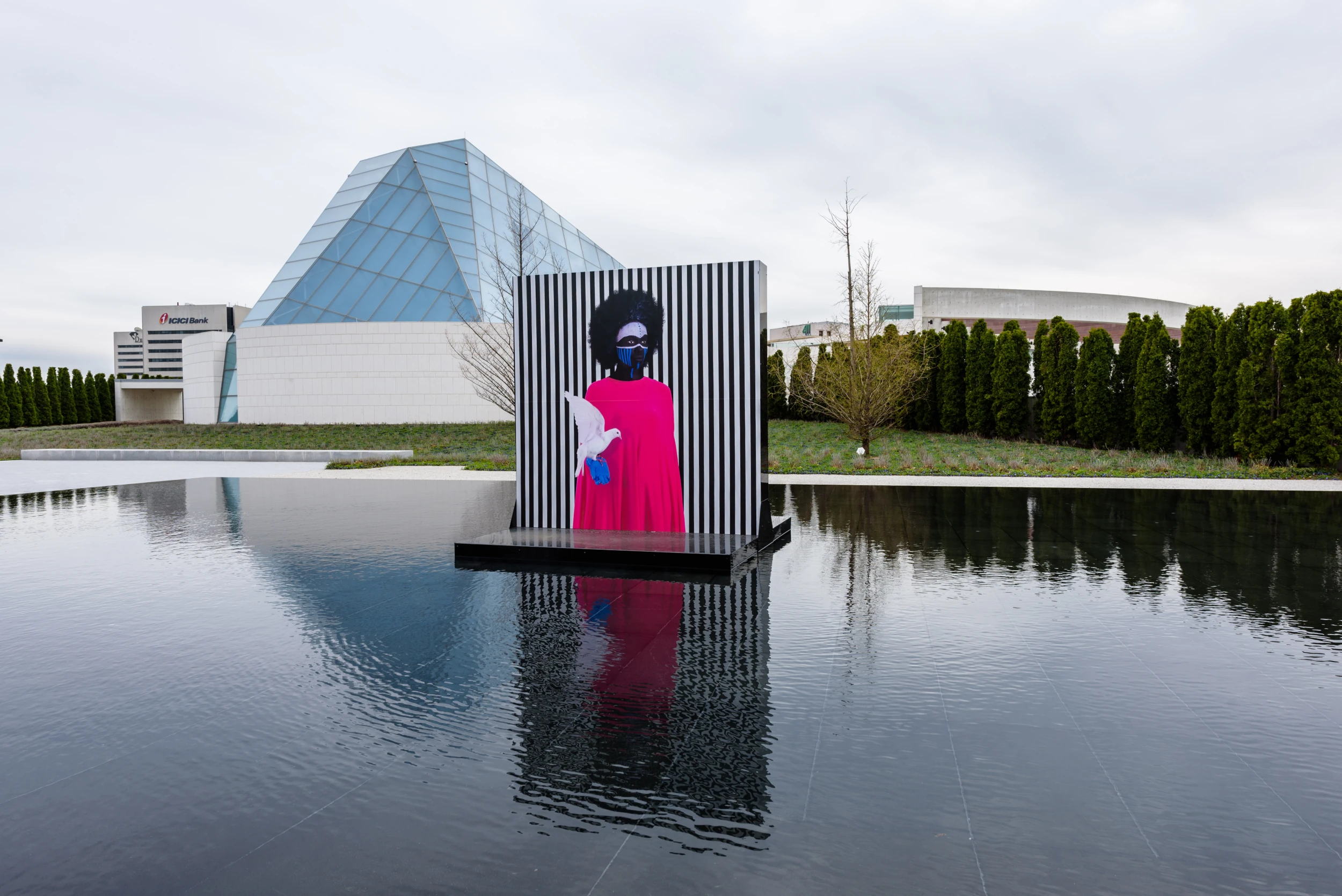
Image above: The biennial festival image Vevey, Switzerland, presenting Marvin Leuvrey's work in its 2014 edition. Image kindly supplied by the organisation.


