

Mama Coca
I was born and grew up in Bogotá, Colombia’s cold and congested capital. Thousands of us living in the cities hadn’t had the chance to see coca, let alone touch it, and yet a scarlet mark had already been etched into our minds. One of my first memories connected to the coca plant is not an image, but a voice; the soft voice of a child who, accompanied by a sugary melody, shared a simple yet powerful message with Colombians everyday: “La coca, la marihuana y la amapola, matan. No cultives la mata que mata.” [translated to English: “Coca, marijuana and opium are plants that kill. Do not nurture plants that kill.”] Broadcasted on TV, this warning took the form of an animation featuring a marijuana leaf with an evil face accompanying the child’s words. However, my young mind did not register the image but rather the echo of that voice repeating in my head: “Do not nurture the plants that kill.’
Over the years, as I have read, researched, and spoken with other scholars—those who were raised with the belief that “they are plants that kill” lodged deep in our minds and hearts about the history of coca— I have come to sense a question that keeps circling back among many of us: What has this plant done to us? Yet perhaps the question we should start asking ourselves is: What have we made of this plant? With Mama Coca, Colombian artist Nadège Mazars takes up this question by inviting us to travel with her through a long historical arc, from pre-Hispanic to present times.
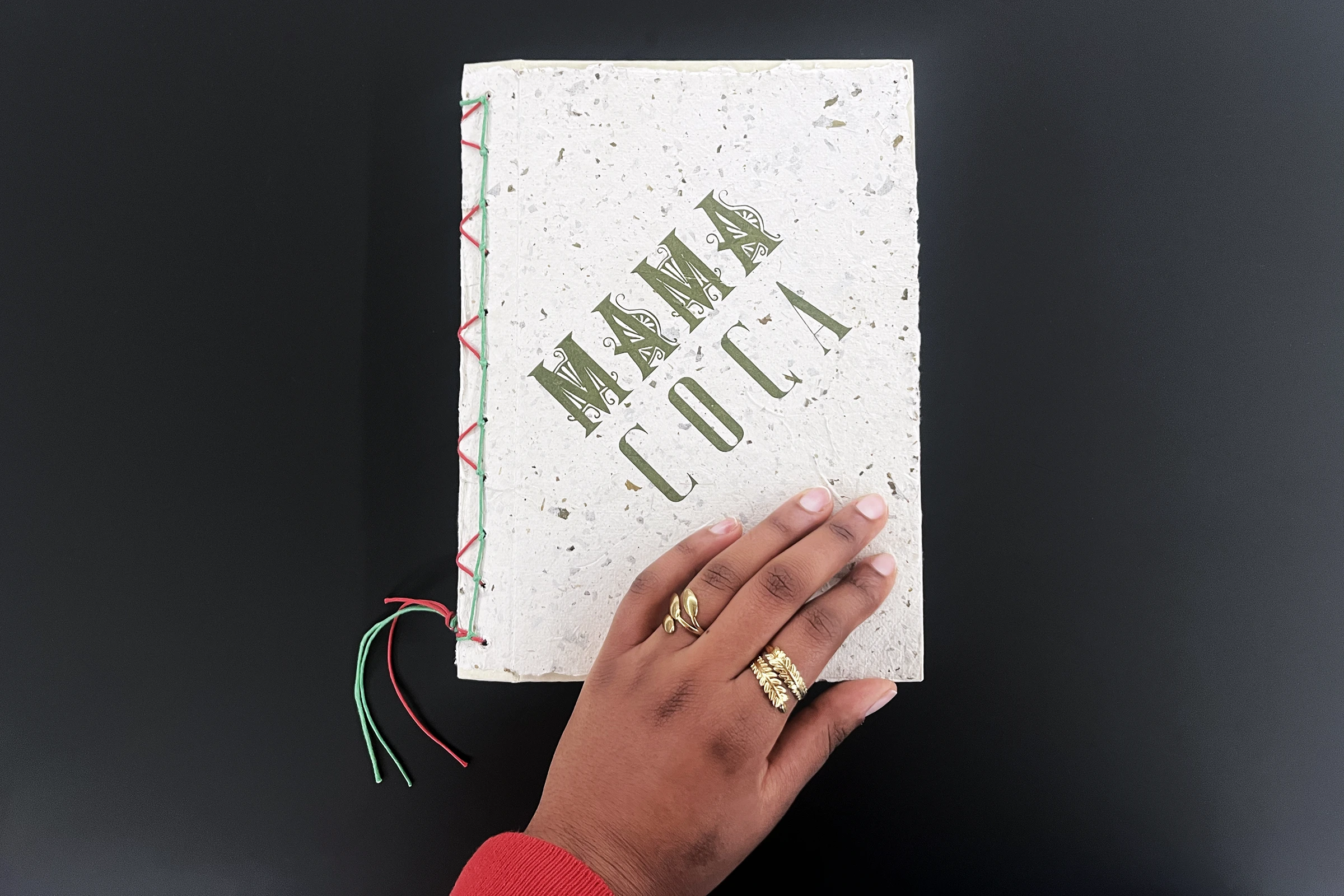
Nadège Mazars, a French photographer living in Colombia since 2007, is known for taking a holistic approach to exploring the effects of global issues related to migration, nature, and war and peace. Mama Coca, a multi-faceted project that was exhibited before1 and is now also published as an artist book, includes photo series, texts, and historical and documentary archives. It results from a photographic investigation that aims to deconstruct prejudices about the coca plant, and the narrative developed from the countries of the global North, reducing it to an illicit product.
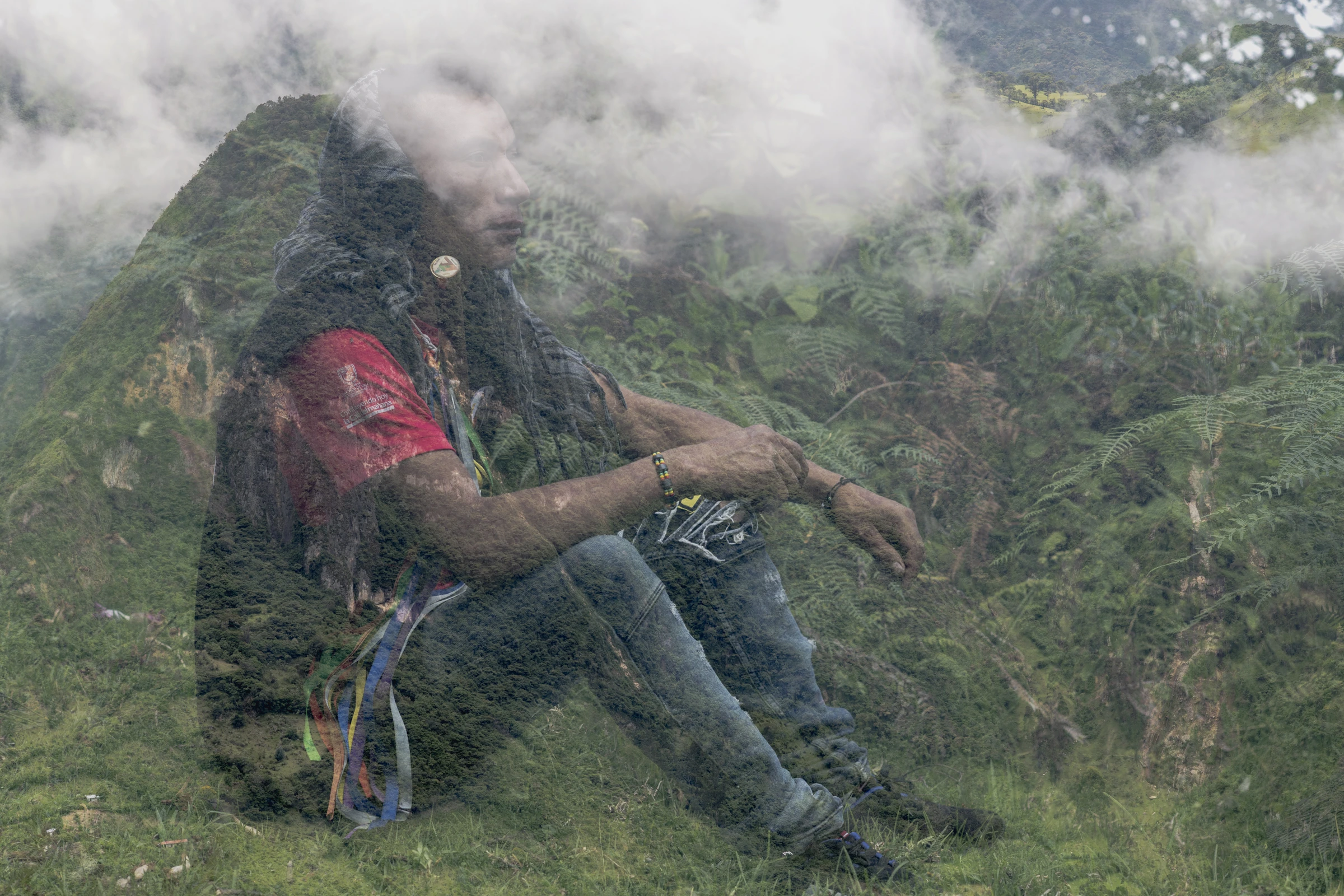
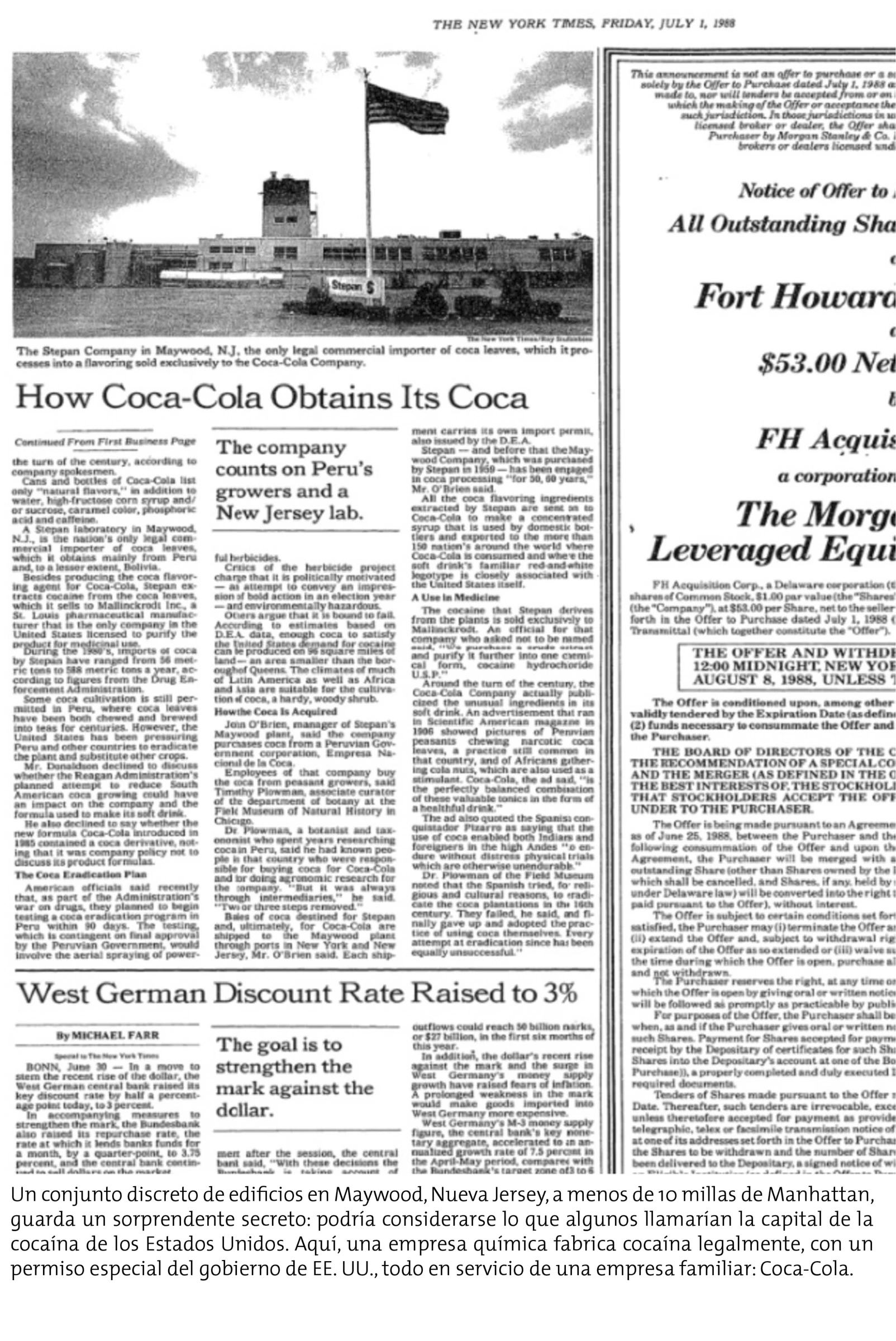
Mazars’ more experimental and fluid approach to camera use—long exposures, tight crops, and playful manipulations of colour— supports the spirit of coca that inhabits the territory. This exploration evokes the feeling that the plant is a living presence, intertwined with its landscape and its people.3 In the book, the story unfolds along two parallel and interconnected strands. On the one hand, it follows the lives of several representatives of one of Colombia’s most important Indigenous organisations, the Cauca Regional Indigenous Council (CRIC),3 and their struggle to change the history of the leaf—until now marked by profit, extraction, conflict, and cultural appropriation. On the other, it presents an archival body of work that brings together visual sources and written research on the history of coca, from press clippings to biochemical charts which reveal the shifting ways in which the leaf has been used, studied, and represented.
Mazars’ approach reflects a growing interest in recent years among independent journalists, photographers, and artists to understand the coca leaf beyond sensationalist or prohibitionist narratives. These practitioners engage in long-term, slow investigations that reflect on the social meanings of coca production and consumption across Abya Yala, a name for The Americas used by many Indigenous peoples, originating from the Guna (Kuna) people of Panama/Colombia, meaning "fertile land" or "land of vital blood".4
Mama Coca approaches the history of coca in an open and attentive way, avoiding the repetitive framework in which the coca leaf is reduced to a story of narcotrafficking and violence in Colombia.5 Mazars thus offers a fresh and expansive approach of “perspective documentalism”, bringing together diverse, and often complex, narratives into a coherent whole. By bringing alternative sources to light, she invites us not only to uncover stories that have long remained in the shadows, but also to ask how our collective perception of coca’s history might shift if these images and documents were more widely seen and shared.

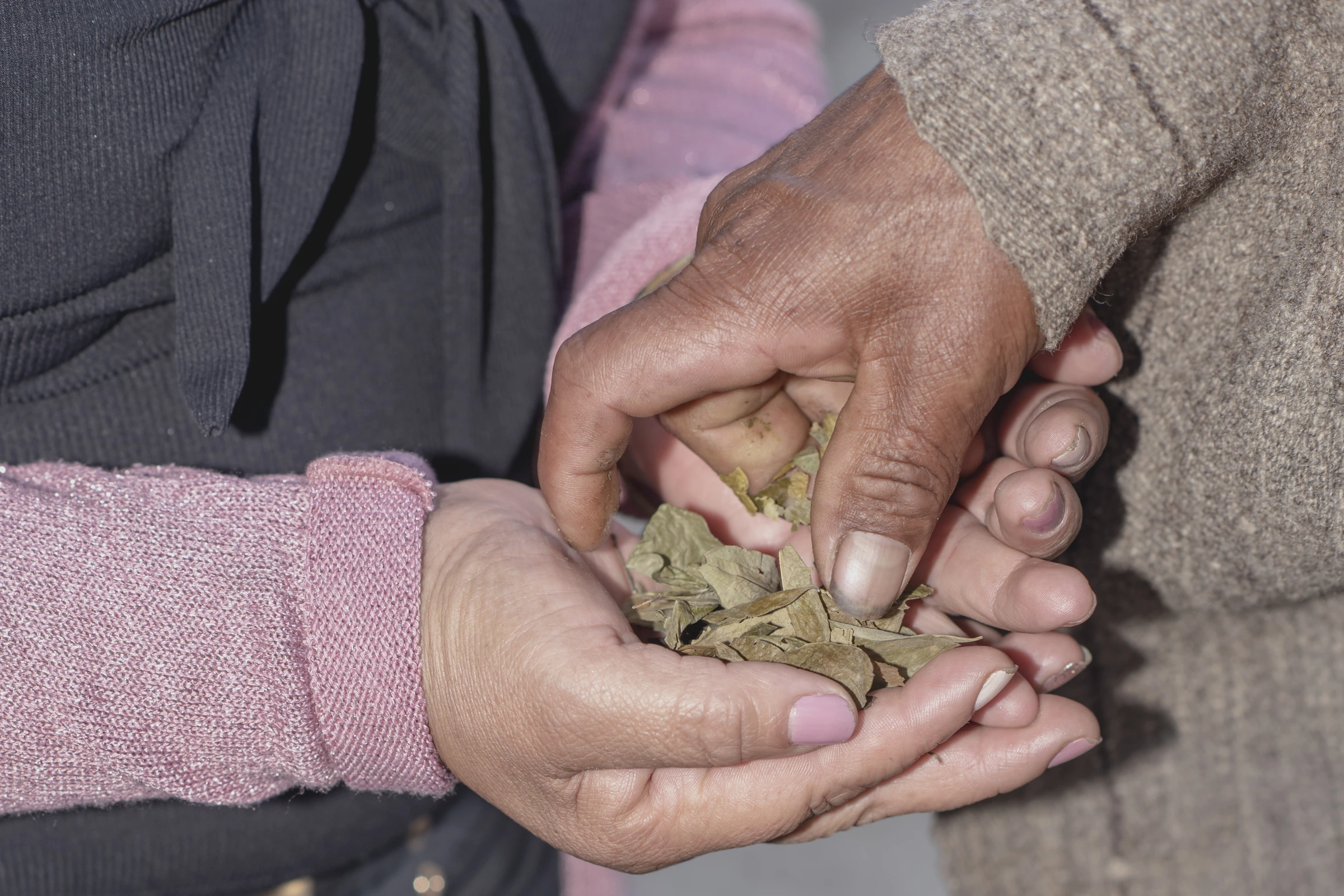
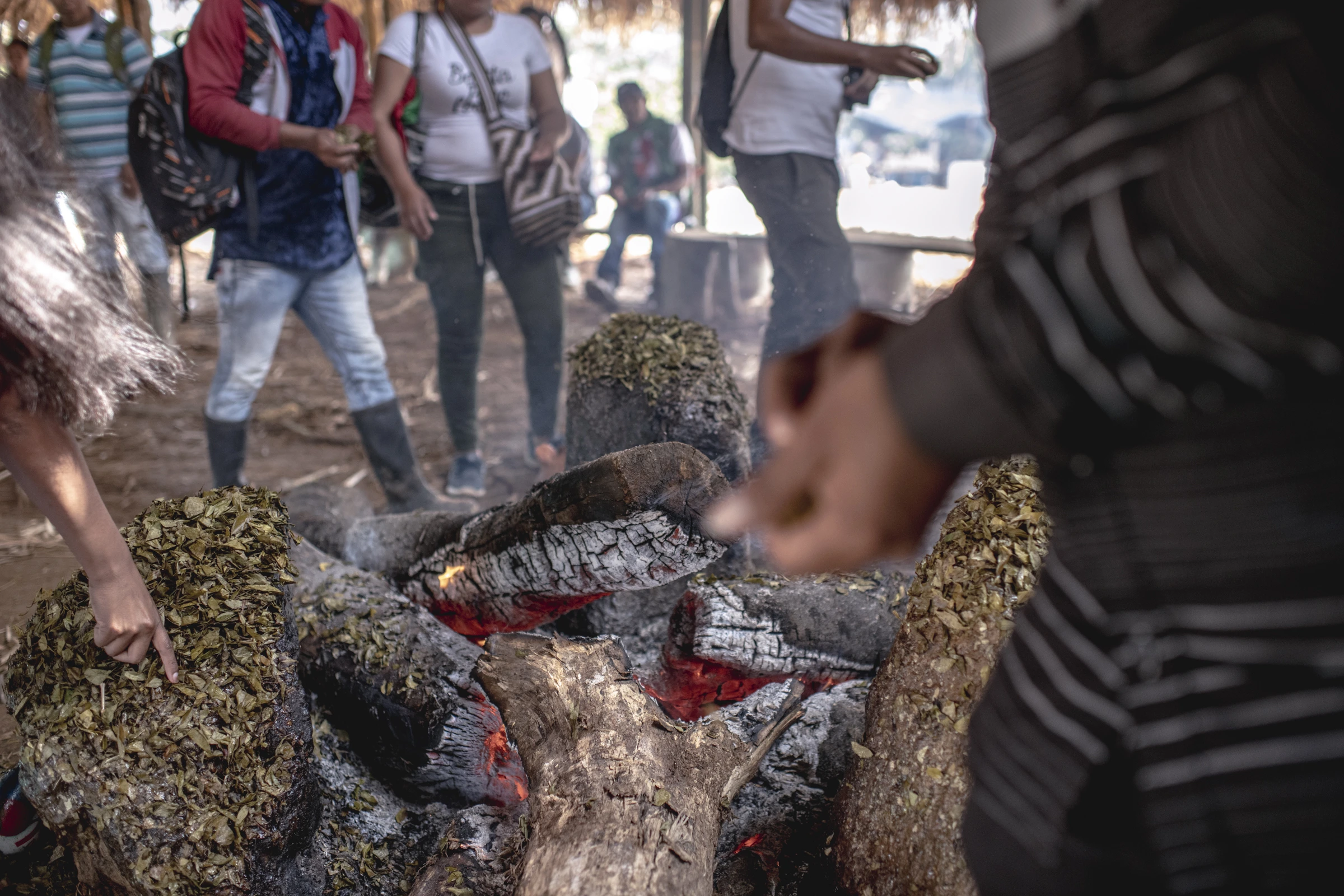
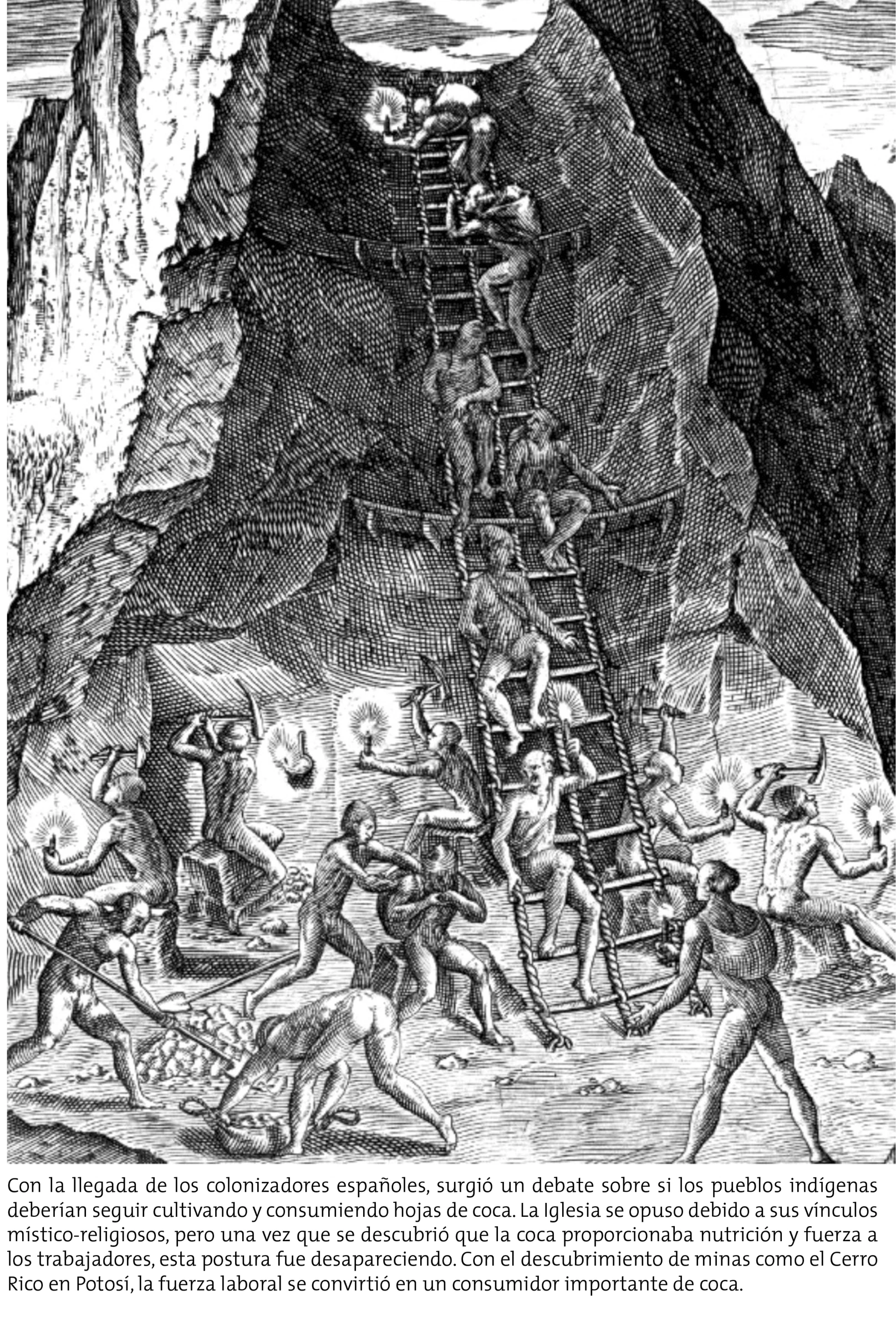
One of the visual sources that caught my attention in Mazars' collection was an engraving of the gold mines of Potosí. Through these images, and the essay by historian Damián Augusto Gonzales Escudero that is published alongside the visuals, a very important but overlooked fact is highlighted: that coca has played a central role in the creation of this harsh reality we call capitalism.6
For over 8,000 years, coca–hayo or yaat–has been embedded in the spiritual and social practices of Andean peoples. Colonial violence transformed the conditions of its use: as Indigenous agriculture was replaced and forced labour imposed, the coca leaf, valued for its medicinal and energising properties became indispensable to survival within the mines.7
A local trade of coca leaves emerged in the valleys near what we now know as Chocabamba, La Paz (Bolivia), and Cuzco (Peru), seeking to meet the growing demand in the nearby mining centres. The demand grew so much that, according to historian Orche García, a Spaniard visiting Potosí in 1562 exclaimed that it was not possible to obtain gold or silver from the indigenous people without using coca, which, in places like Potosí, was chewed (‘acullicaba’) three times a day in the mine.
Another dimension touched upon in Mazar’s photobook is how this craze for coca extracts by western companies played a big role in creating a global demand for cocaine hydrochloride. When the alkaloids in coca were isolated, crystallised, and enhanced by chemists Friederich Gaedeke (1855), Albert Niemann (1860), and Wilhelm Lossen (1862), creating what is now cocaine hydrochloride, commercial interest in its raw material, the coca leaf, was quick to emerge. Several American, French, and German companies began producing extracts from this leaf to create tonics, beverages, and even pills for supposedly medicinal use, including the famous Coca-Cola. Mazars’ compilation also documents these developments, presenting how the leaf became a modern commodity.8
There is a notable absence of material and photographic evidence of this boom in the late 19th and early 20th centuries when words such as “laboratory”, “cocaine factory”, or “coca plantation” are typed into image search engines like Google. The focus is on territories such as Colombia, which have become the front lines of contemporary drug policy. Coca leaf samples, photographs of plantations in Taiwan or Indonesia, and European laboratories are preserved, disaggregated, and hidden away in European archives and museums such as the one where I work—the Wereldmuseum in The Netherlands—revealing a hidden network of interests that drove the large-scale creation of a global market for cocaine hydrochloride.

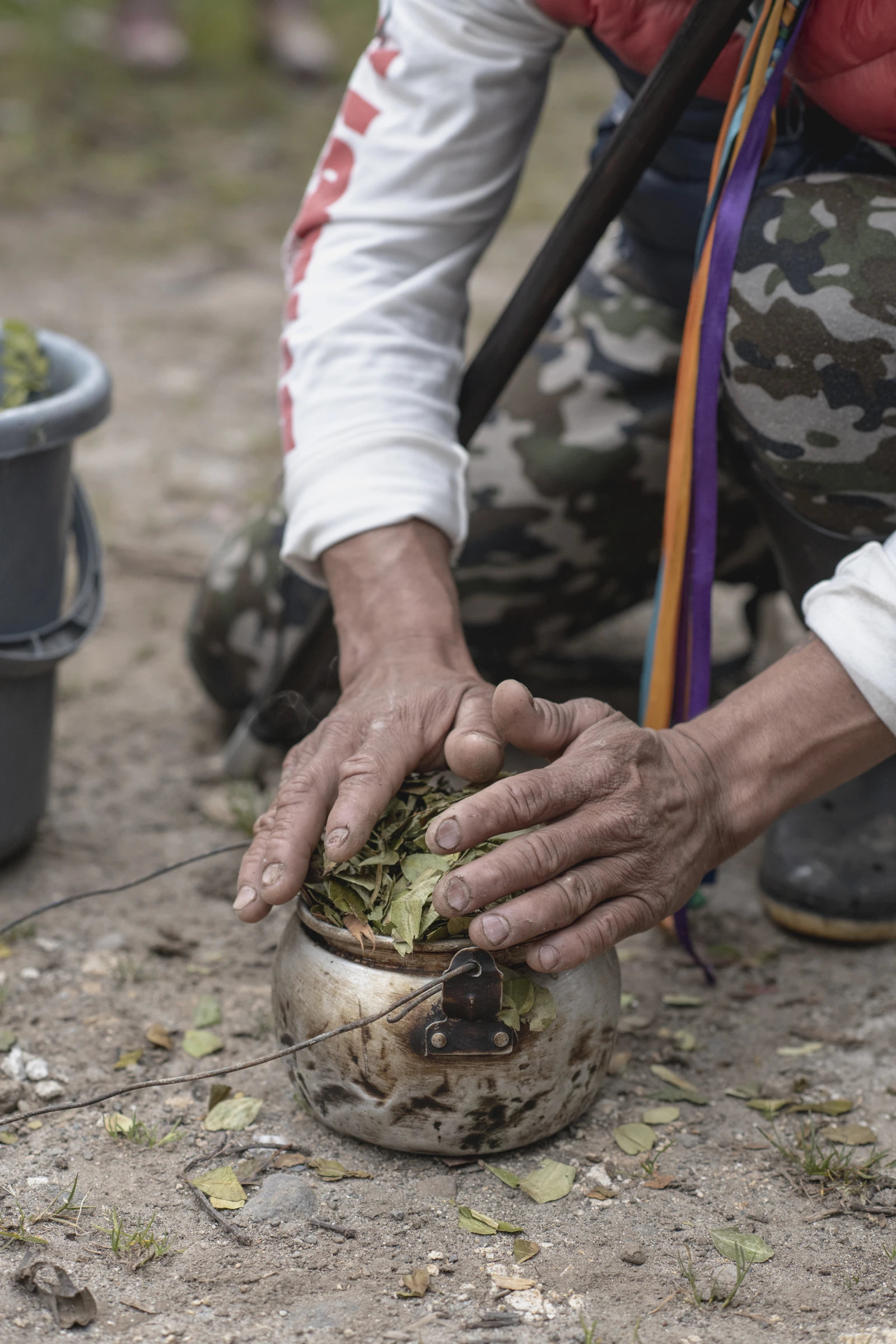
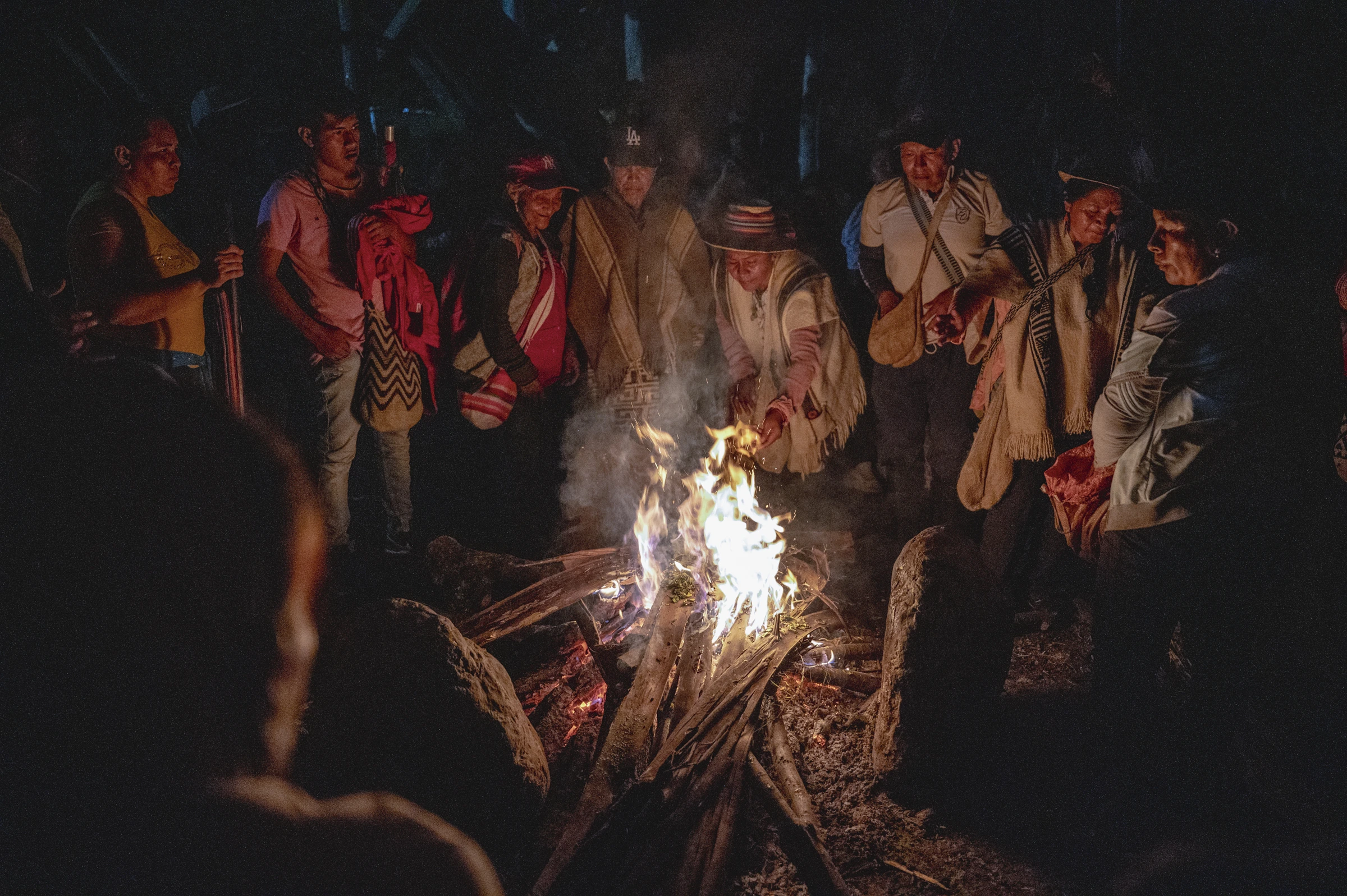
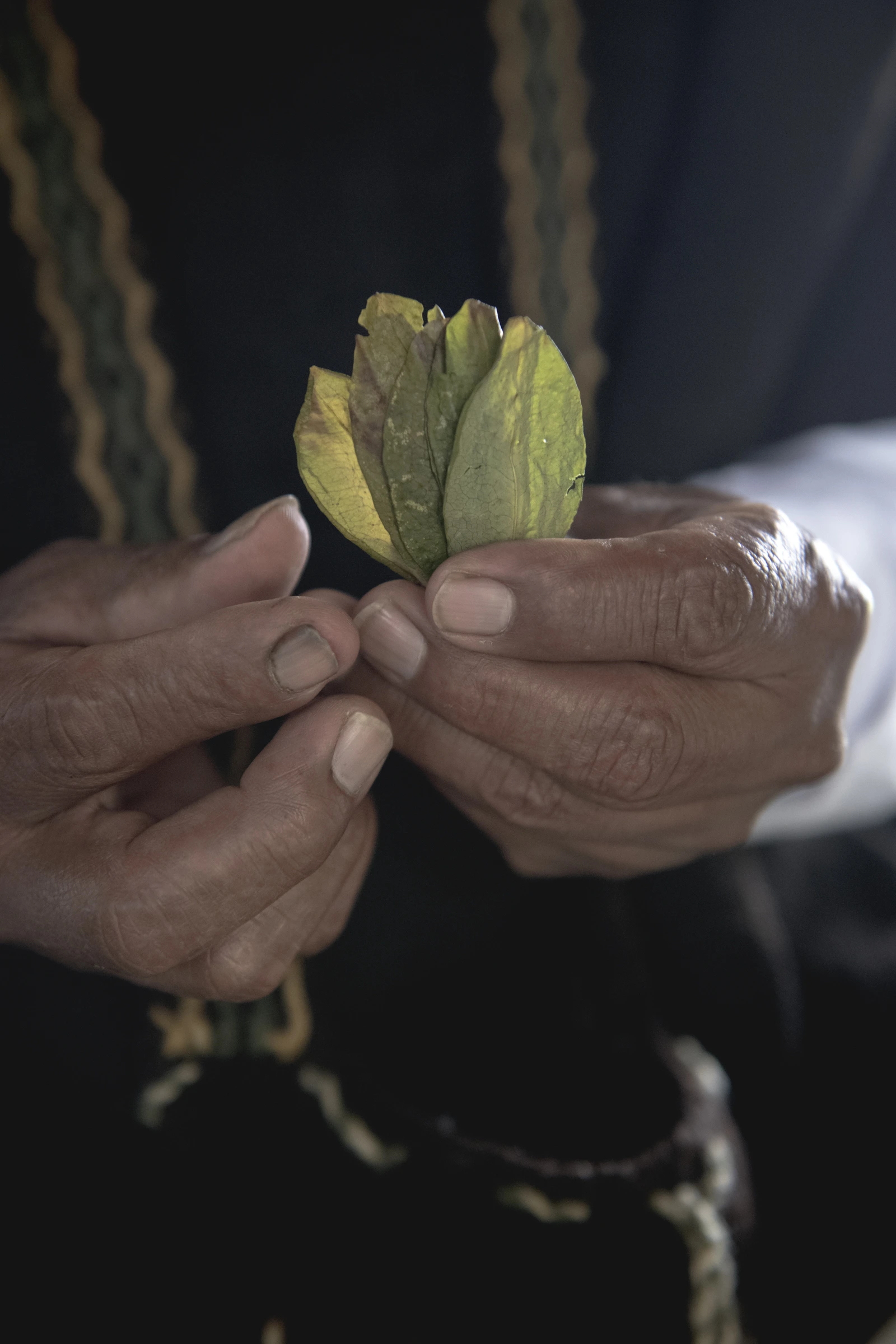
Here on the left we see a resident of the Resguardo Papallaqta —the Papallaqta reserve— carrying a bag full of coca leaves. She is about to take part in a walk to Magalena Lake, a sacred site for the Indigenous peoples of Cauca. On the picture on the right, an incense burner filled with coca leaves is depicted. It accompanies Resguardo Papallaqta’s walk to the Magdalena Lake, a sacred site for the Indigenous peoples of Cauca.
In Mama Coca, Mazars highlights the stories of several spokespeople for the Nasa people.9 Their faces, sometimes silent, sometimes alive with movement, bear witness to a dialogue that began in 2021 and blossomed after four-years of longstanding conversations. Through the words and gestures inscribed in this book, the indigenous spokespeople (via Mazars) invite us to conceive of a world where coca is the axis of life.10 As their voice deserves to be acknowledged too, here an excerpt of what Julio César Caldón Masavuel, an ancestral Kokonuco elder of the Puracé reserve, has to say:
“¿Para qué más nos sirve la hojita de coca? Para concentrarnos. Me pongo a masticar y me pongo a pensar en cómo sacar del problema a una familia. La misma hojita me va orientando… por eso se llama hoja. Así como está la hoja del cuaderno, la hoja del libro, es como yo empiezo a leerla desde allí, desde ese masticar, desde ese saborear de la hojita."
["What else is the coca leaf good for? To help us concentrate. I start chewing and thinking about how to get a family out of trouble. The leaf itself guides me... that's why it's called a leaf. Just like the page in a notebook or the page in a book, that's how I start to read it, from that chewing, from that savouring of the leaf.”]11

In Mama Coca, Mazars shows the precarious position that coca occupies: caught between competing legal, political, and cultural forces. In Peru, Bolivia, and Colombia, legal progress has been made toward recognising indigenous struggle for dignity through the protection of coca as a sacred plant and cultural heritage. These advances have opened up avenues for community action, local alternatives, and collective aspirations.
Since the second half of the 20th century, the different indigenous peoples of Cauca have faced pressure from various groups of large landowners and armed groups to take over their ancestral territories for agribusiness, mining, and drug trafficking. Among these armed groups are the former FARC and ELN guerrillas, as well as paramilitaries and criminal gangs. Due to these threats, and because of economic necessity, many indigenous peoples have been forced to grow coca leaves for cocaine production.13
According to the United Nations Office on Drugs and Crime, in 2023 illicit activities account for nearly half of the income sustaining the department, fostering a structural economic dependency. The expansion of coca cultivation is associated with a tragic toll of 252 homicides of social leaders, farmers, and Afro-Colombian or indigenous people associated with the CRIC between 2017 and 2023.14 Yet, depicted in murals, packaged as gifts, offered as food, the power of coca is present in its ability to unite minds and spirits, providing strength in the midst of a reality driven by profit and war.
Since the late 1980s, Bolivia (2009), Colombia (1986), and Peru (2021-ongoing) have acknowledged, either constitutionally or through legislative initiatives, the importance of respecting and preserving indigenous material and immaterial culture, including the medicinal and traditional use of the coca leaf. This recent opening has allowed the production and trade of medicinal and food products, creating a commercial alternative and a strategy that raises awareness about the benefits of the leaf. These products include teas, ointments, natural tinctures, and coca-based soft drinks or alcoholic beverages.
The narratives that are seeking to promote social rejection of these plants, even leading to military intervention and crop eradication, are tenacious. Yet Mama Coca can be seen, in context of this all, as an effort to listen to the plant and the worlds it sustains, rather than reducing it to an object of prohibition or extraction. As the title of Mazars’ book suggests, by tracing the many ways its relationship with humans has shaped its path, the book seeks to bring us closer to the spirit of the leaf: “Mamacoca’’ in Spanish, or “Kuka Mama’’ in Quechua.15
Meanwhile, beyond the pain, sadness and frustration that have shaped the recent trajectory of the Colombian armed conflict, lies another dispute. Mazars highlights two commercial initiatives involving refreshing beverages from Cauca that have had a significant commercial and social impact: Coca Sek (2005) and Coca Pola (2017). These two beverage projects, fully funded by the local company Coca Nasa, are presented as viable alternatives with great potential. To produce these beverages, they purchase kilos of leaves at a price equal to, or higher than, that offered by drug traffickers and, in this way, they manage to divert leaves from the illegal circuit to a legal product. As David Curtidor, co-founder of Coca Nasa, rightly points out, “Every leaf used to make Coca Sek is one less leaf for the drug traffickers”.16
However, as is also stressed in the book, the momentum behind such initiatives has been stifled by none other than the Coca-Cola Company. Arguing that it prevents making industrial products containing traces of coca, as well as the infringement of the name “coca” as a registered trademark, Coca-Cola has demanded that Coca Nasa ends the sales of its beverages and other food products. Its pressure has been exerted indirectly—through the International Narcotics Control Board—and directly through lawsuits.17 Coca-Cola has so far not responded to accusations of cultural appropriation.18