

Going Mainstream
Growing up in the suburbs of Los Angeles, I was a twenty-two year-old college graduate when I made my first art acquisition. The three black-and-white photographs I purchased featured vistas of Yosemite National Park in Northern California, echoing the elegance of an Ansel Adams’ landscape. I had acquired them from a fellow student on the campus of my university in Los Angeles and, whilst the price was high, particularly for a recent graduate, it was not unreasonable. The largest of the three prints, and still my favorite to this day, is the image of Yosemite’s half dome where the immense flat side of the rock façade slices through the picture plane in white brilliance, while the darkness of its surrounding shadows envelop the landscape.
The story of my first art acquisition is by no means unique, especially when it concerns young art lovers who grew up in the Western world. Due to their achievable price and aesthetic accessibility, a photographic print, drawing, or watercolour is often a burgeoning art aficionado’s first purchase. Thus, when I arrived in China, I was surprised to find, that despite the medium’s saturation, photography lacked the same dedicated following by the growing group of enthusiastic and emerging young collectors. Shanghai in 2011, despite a population of close to 20 million at the time, had only three galleries dedicated to the promotion and sales of photographs—OFOTO and M97, both established in 2006, and Beaugeste Photo Gallery, set-up the year after.
The three galleries approached their markets with varied offerings, with OFOTO promoting Chinese conceptual photographers, Beaugeste offering limited edition prints of historic China in the 1970s, from Marc Riboud’s eloquently captured black-and-whites to Bruno Barbey’s vibrant Kodachrome scenes. The last of the trio, M97, offered a hybrid from its location in Shanghai’s famed M50 Art District, introducing locals to leading global photographers such as Michael Wolf and Nadav Kander, while shooting off the careers of young Chinese conceptual photographers such as Jiang Zhi and Chen Wei. Aside from these commercial galleries, there was also the Ray Art Center, a non-profit research and exhibition center, established in 2008 and dedicated to promoting the general understanding and awareness of photography as a genre of contemporary art. In 2014 the Ray Art Center moved to the northern part of Shanghai in the working-class district of Hongkou, where they were extremely active with a public programme of well attended artist talks and workshops. In the early 2010s, the photographic offerings were not vast, but the Chinese contemporary art world was accelerating to a meteoric rise, driven by investment and the ambition to partake in the cultural dialogue created by the global arts circles.
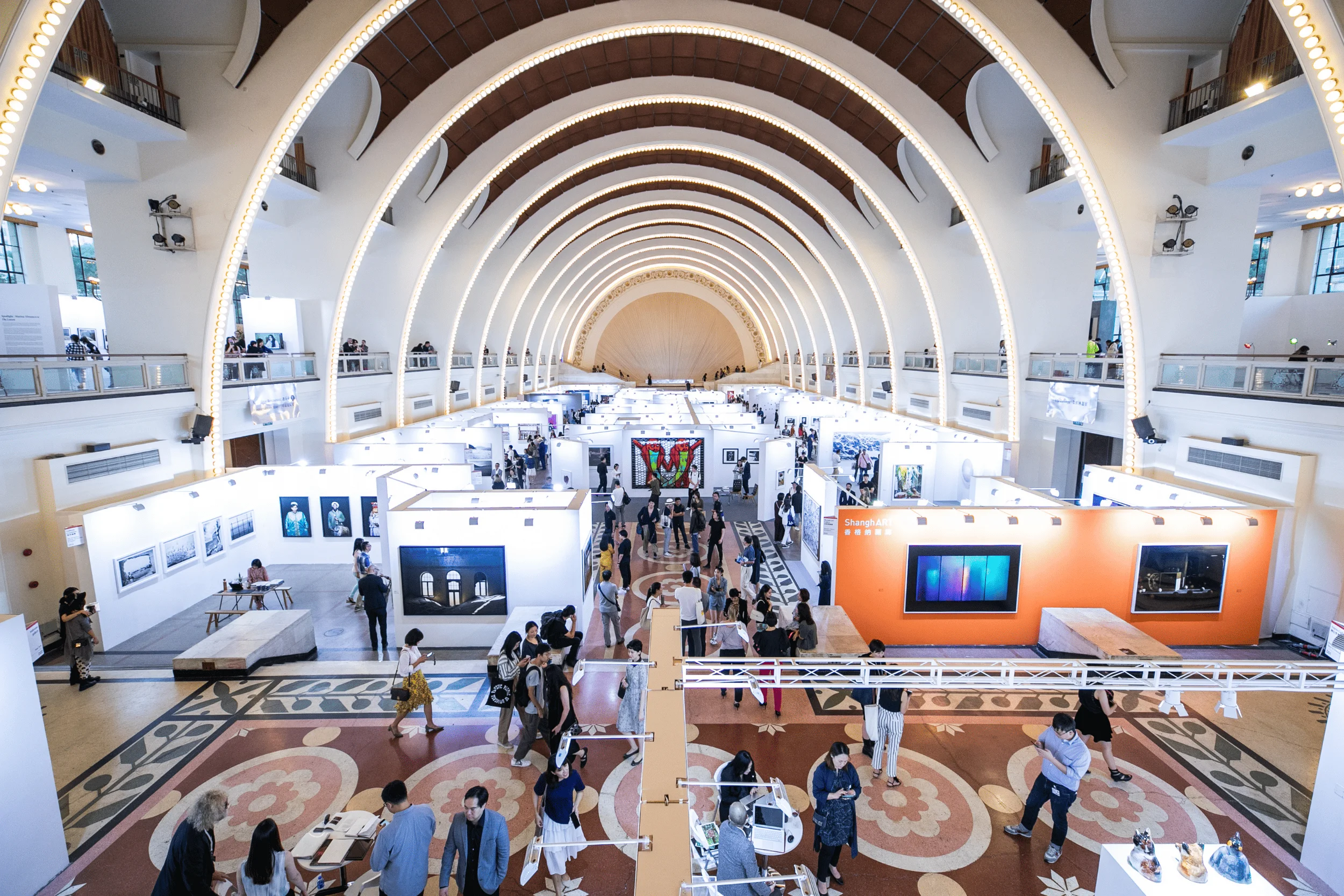
The year 2014 was a pivotal, game-changing moment for art in China as a whole, as we heralded an unprecedented season of art fairs in Shanghai. On the roster was the BolognaFiere Shanghai Contemporary Art Exhibition, which was reorganised to offer international contemporary art to mark its seventh year in Shanghai. Making a second appearance was ART021 Shanghai Contemporary Art Fair, which discreetly slipped into the art scene with exclusive invitation- only admittance. West Bund Art and Design, helmed by the renegade artist Zhou Tiehai, was generating an immense buzz after securing an enormous space in the repurposed airplane hangar in the industrial district of West Bund. Entering onto the platform for the first time was the inaugural edition of PHOTOFAIRS Shanghai, dedicated predominantly to photographic works of art.
What did the explosion of art fairs in Shanghai signify? To the general Chinese public, many found it incredulous that paintings of green splayed dogs by the painter Zhou Chunya and purple barcodes by the conceptual artist Liu Wei were able to command not only thousands, but hundreds of thousands of US dollars. In the early 2000s, Chinese exhibitions were all the rage, typified by the Metropolitan Museum of Art in New York’s 2013 exhibition Ink Art: Past as Present in Contemporary China, which despite the museum being famously dedicated to works by dead masters, featured Chinese contemporary artists, many of whom were very much alive and present on opening night.
Skeptics in the art world wondered if the phenomenon and zeal for strange and mystifying paintings and sculpture by Chinese contemporary artists would eventually phase out, like the craze for Chinoiserie that had swept through Europe in the mid-eighteenth century, or if this trend would in fact define a new-found Chinese legacy that was here to stay. Throughout history, artistic objects created and produced in the Middle Kingdom have always remained in high demand, having seemingly never fallen out of favour in either local or export markets. Fine art objects, such as jade pendants, bronze vessels, Buddhist statues, calligraphy, ink paintings, and ceramic wares have historically been venerated with utmost esteem and high regard. Regardless of the passage of time, as empires rose and fell, the momentum for collecting art within elite circles has never slowed down. During the Ming dynasty, one ink painting by the notable, and then living artist, Qiu Ying (c.1494 to c.1552) commanded a contemporary price equivalent to that of a large house. In the mid 1980s to early 1990s, Belgium businessman and founder of the famed UCCA Center for Contemporary Art in Beijing, Guy Ullens, was paying a minimum of $5,000 for paintings by emerging Chinese artists whose names he could barely pronounce. Perhaps the sustained fascination with Chinese art is its ability to not only directly reference China’s unique cultural history, but also narrate the wider context of social, political, and economic conditions.
Yet, despite the fervour of collecting art for prestige and investment, the chasm between acquisitions of photographic and non-photographic contemporary art has not closed and remains wide. Even three years after the establishment of PHOTOFAIRS Shanghai, a lengthy 2017 headline by the South China Morning Post inquired, “Can Shanghai photo fair persuade Chinese art collectors to invest in contemporary works? China is the world’s second-largest art market but makes up only 1.2 per cent of art photo sales. Those behind PhotoFairs Shanghai, featuring works by luminaries such as Ren Hang and Zhang Hai’er, are hoping to change that”.1 Collecting photography has been, and remains, a vexing source of dilemma in China, and one that impacts both the producers and sellers of photographic based artworks.
While China boasts prestigious art schools, such as the Central Academy of Fine Art in Beijing and the China Art Academy in Hangzhou — where the traditions of oil and ink paintings and woodblock prints still dominate the main topics of study — courses on photography as fine art are a recent phenomenon, beginning more recently about 30 years ago. During the 1990s, and the early years of China’s opening up and economic reform, possession of an expensive camera was an activity usually reserved for photojournalists to document news-worthy events to accompany texts in printed newspapers. Even today, of the four top institutions that offer programmes in photography (Tsinghua University, Beijing Film Academy, Central Academy of Fine Arts, Communication University of China), two remain distinctly tied to film and communication. The universally recognised notion that photographs serve as documentary evidence and representation of truth still lingers heavily in China as a historically contingent construction.2 Perhaps this explains in part why, despite the meteoric rise in the sales and purchases of art in China, there is still a notable lag in the acquisitions of Chinese photography as collectible, such to the extent that the low numbers of photographs are not even included in art market reports.3 While the world is familiar with names like Ai Weiwei, Xu Bing, or Cai Guoqiang, how many names of Chinese artists can one name whose main practice is photography? And whilst several volumes of surveys of Chinese contemporary art abound, written in English by notable international scholars from Michael Sullivan and Julia F. Andrews to Chinese heavy-weights like Lv Peng and Gao Minglu, there are merely two English-language books on the topic of Chinese contemporary photography that are available to readers outside of China—Claire Roberts’ Photography and China (2013) and Wu Hung’s Zooming In: Histories of Photography in China (2016), both published by London based Reaktion Books.
This is not to imply that, within China, there is no interest or passion for photography as both a topic of study and a genre for collecting. The person in China credited with shaping the promotion of photography as contemporary art is RongRong (born 1968), the founder of the prominent Three Shadows Photography Art Center, in Beijing’s Caochangdi Art District, and its sister brand Xinglinwan, in Xiamen’s Jimei District. Yet, even a heavy-hitter like RongRong owes his fame to his early days as a documentary photographer who captured the daily lives and artistic performances of artists like Zhang Huan and Ma Liuming, who have culled far greater international fame.
According to Hantao Shi, a leading researcher in the field of Chinese contemporary photography and the former Executive Director of Ray Art Centre, there has always been a dedicated, albeit small, coalition of photography collectors in China. However, in recent years, that base has been expanding. The cohorts of Chinese collectors can be loosely divided across generational lines. The first is predominantly male, who are over 50 and favour historic images. These older connoisseurs seek out and prize historical snapshots of cities and vintage portraits of famed movie stars from a by-gone era. The photographs from the 1930s to 1970s that command the highest prices are those by unknown photographers, as exemplified by the many, now-valuable, photographs of Mao Zedong taken by official photographers whose names were rarely recorded. The interest and level of collecting by this circle of older Chinese has remained fairly insular, with the sellers and buyers having long- term relationships and transactions taking place outside of the formal gallery system.
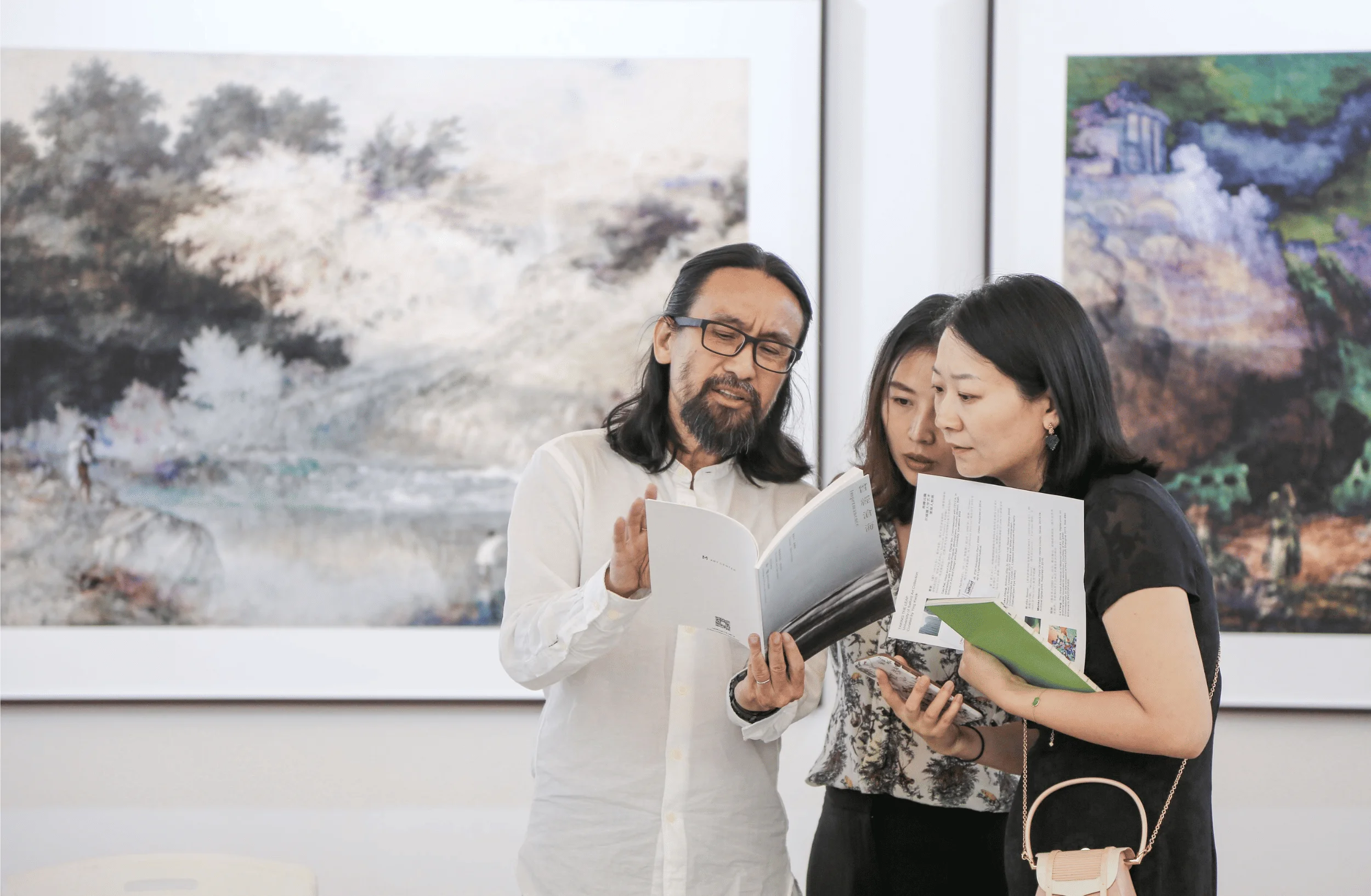
Conversely, the other spectrum of collectors is increasingly composed of young working professionals, both male and female, in the big urban cities of Beijing, Shanghai, Hangzhou, Guangzhou, and Chengdu, who are attracted to conceptual photography as contemporary works of art. According to Peipei Han, who served as the Associate Director China of PHOTOFAIRS from 2015–2019, the sales of Chinese contemporary photography have steadily increased every year since the fair’s inception. She advises that the sale figures cannot be isolated to the days of the fair, which has a short run lasting only four days, noting that contacts established at the fair often lead to subsequent transactions when collectors visit the gallery post-fair. “If we say the collecting of Chinese photography is increasing, it’s within the realm of contemporary art”, admits Shi.
Yang Fudong, China’s highest grossing contemporary photographer, embodies and exemplifies this trend where his photography has achieved mainstream status in the international arena of contemporary art. Refusing to isolate his practice to photography, albeit it was his series of black-and-white images that was the catalyst for his fame, Yang purposely prints stills from his moving images to increase his collector base since the number and price of his limited prints are far more accessible to high-end collectors than the number and price of his limited edition video works that are predominantly acquired by institutions.
The establishment of PHOTOFAIRS Shanghai was also important for overlaying international standards for printing and selling photography on China’s domestic market. Trust remains a large issue in China where forgeries are rampant.4 Former photo fairs in
China were organised and executed by the government, thus it was a significant paradigm shift when the international PHOTOFAIRS, a joint venture between Angus Montgomery Arts and World Photography Organisation, entered Shanghai. And whilst the Covid-19 pandemic saw the cancellation of the 2020 edition, the 202 1 edition is scheduled to take place from September 23rd to 26th in the same venue — Shanghai’s gorgeous Sino-Russian style Exhibition Centre. PHOTOFAIRS 2021 is expected to see the return of long queues of young, art loving Chinese collectors, whose gaze towards photography aligns with their affinity for mainstream conceptual art. This demand is sure to not only diversify the offerings presented by galleries and artists at the present and future PHOTOFAIRS, but also expand the evolving discourse of photography in China.
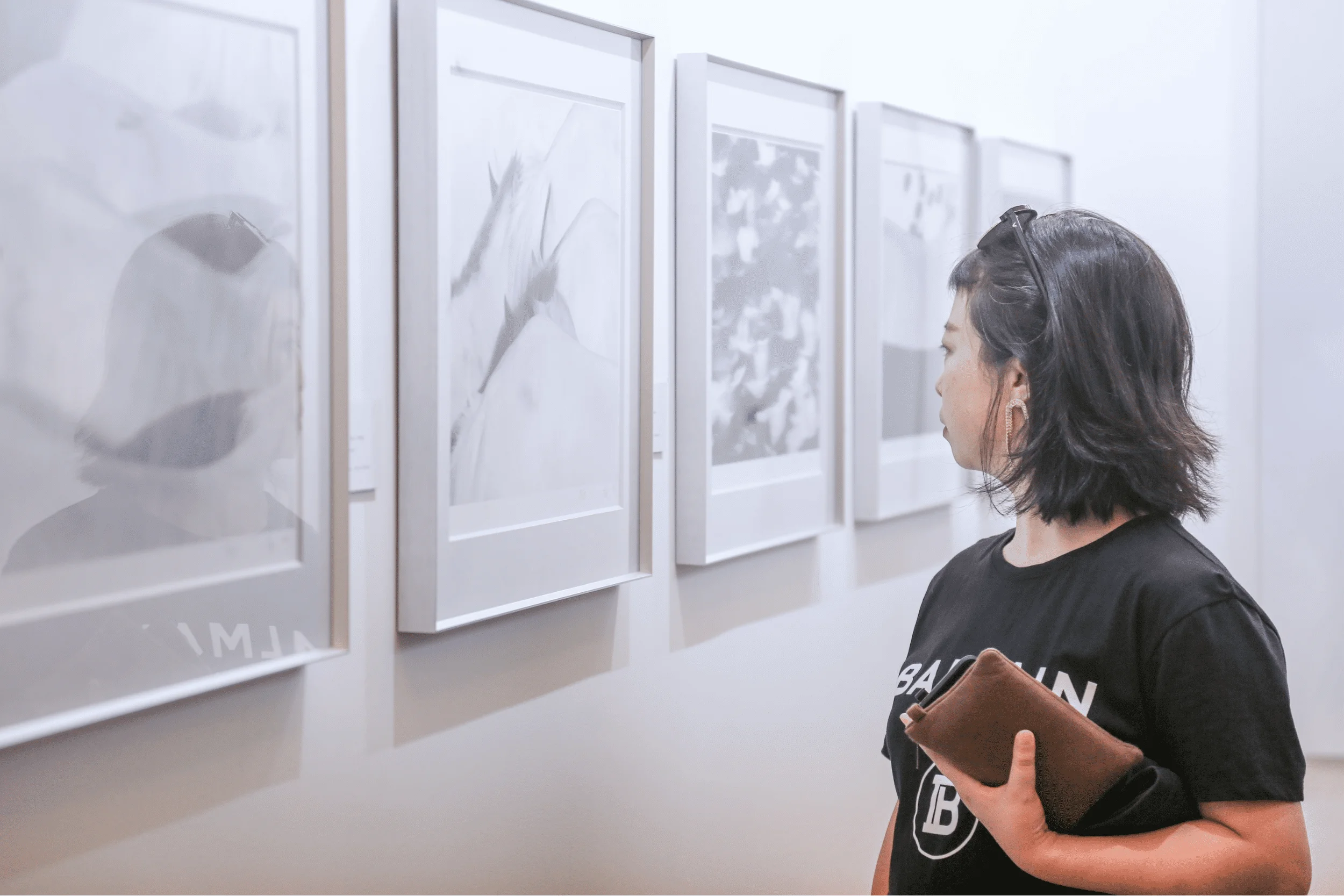
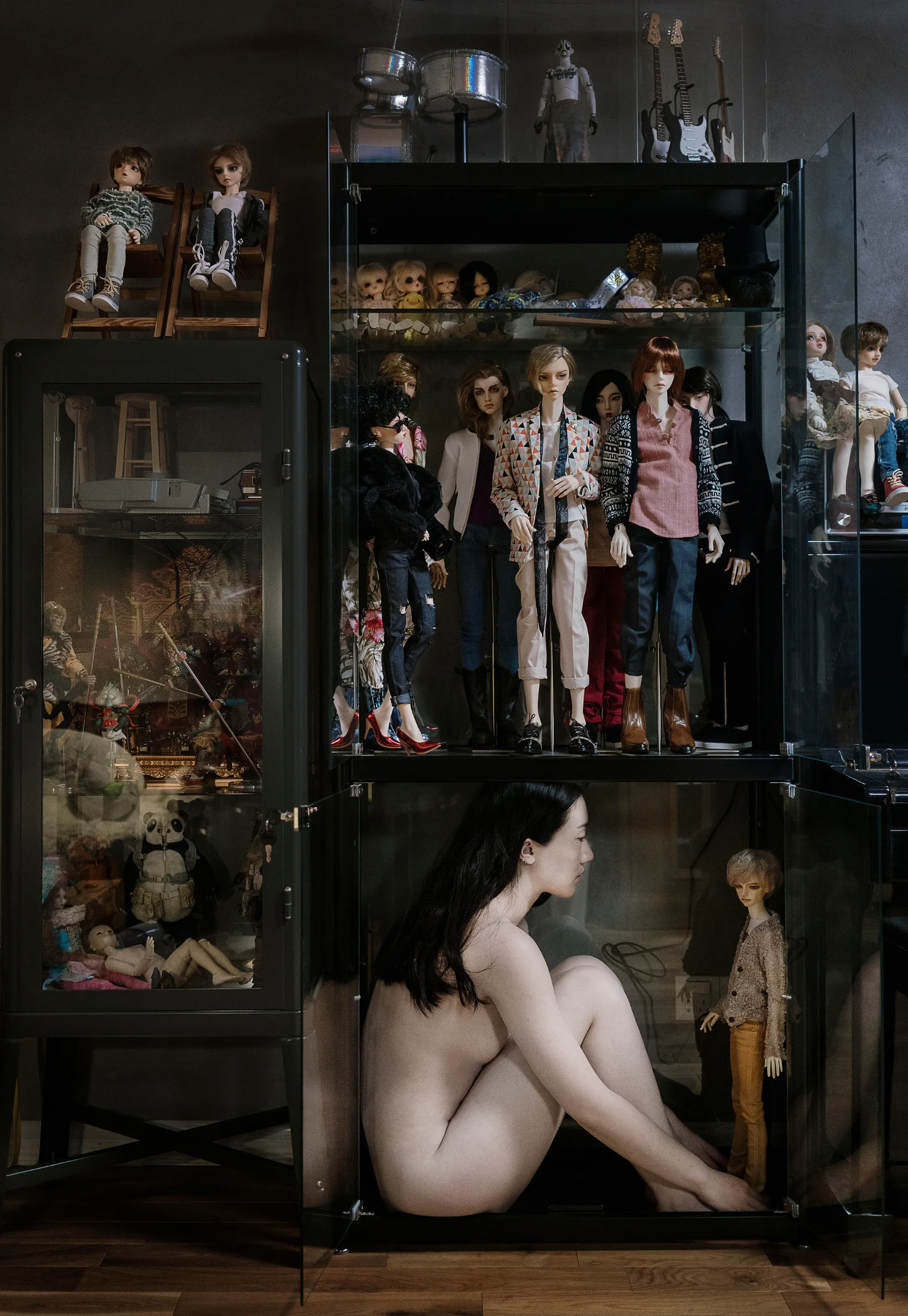
Image above: RongRong, Beijing East Village 1995 No. 43 (Zhang Huan, Ma Liuming “The Third Contact”), Photograph, 1995. Courtesy of RongRong.
1 Enid Tsui, “Can Shanghai photo fair persuade Chinese art collectors to invest in contemporary works? China is the world’s second-largest art market but makes up only 1.2 per cent of art photo sales. Those behind Photofairs Shanghai, featuring works by luminaries such as Ren Hang and Zhang Hai’er, are hoping to change that.” South China Morning Post, September 8, 2017, Link
2 Yi Gu, “What’s in a Name? Photography and the Reinvention of Visual Truth in China, 1840-1911,” The ArtBulletin, April 1, 2014, Link
3 “Building the Chinese Art Market,” The Art Price in 2018, artprice.com, https://www.artprice.com/artprice-reports/the-art-market-in-2018/building-the-chinese-art-market 4 David Barboza, Graham Bowley, and Amanda Cox, “Forging an Art Market in China,” The New York Times, October 28, 2013, Link