

Place of Cool Waters
This is about photography, image and myth-making, and a city―the city you were born in, grew up in. The city you have lived in. Imagine that you look up photos of this city, maybe for nostalgic reasons, maybe for an artistic reference, maybe because you are having a conversation with someone who claims to have visited this city once but their experience seems so foreign to you that you pull out your phone so you can confirm that their city is really the city. Could there be another Nairobi where the drivers are polite? A Nairobi where the men are not absolute creeps? Where the people sound too friendly and are loose with their compliments?
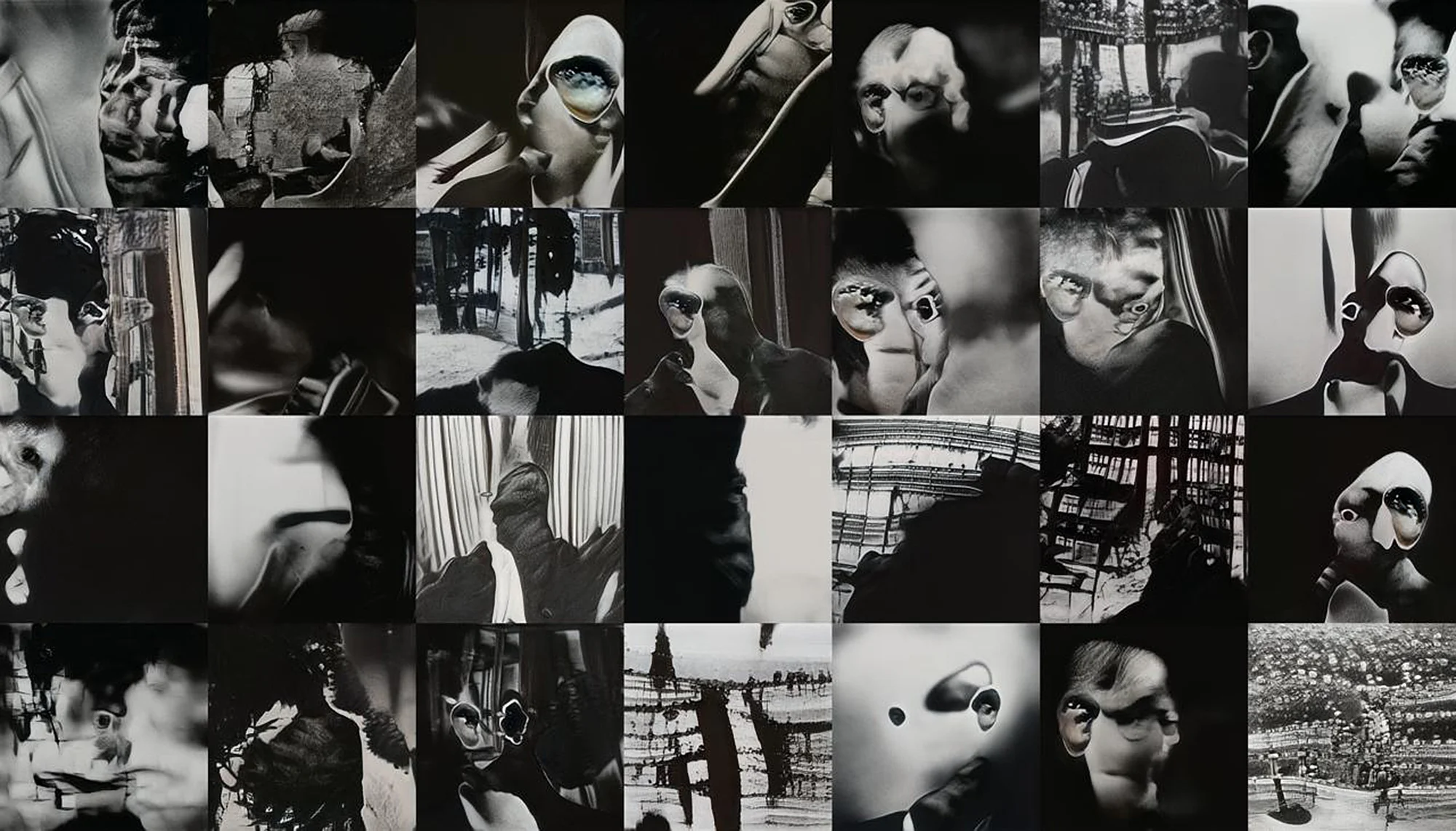
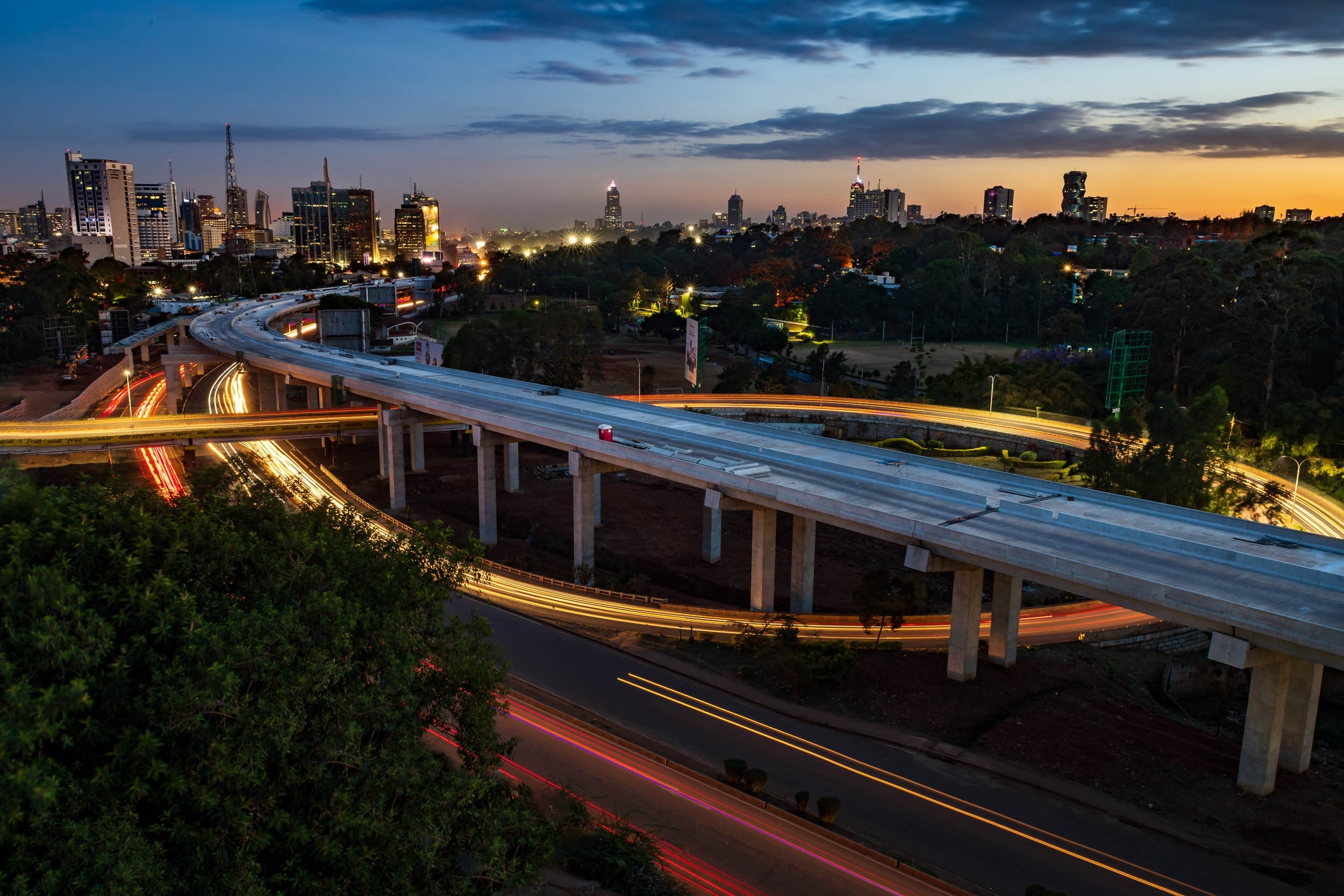
When you see photographs of Nairobi, what you are seeing is its structures, both physical and visual. Its buildings, highways, and expressways; its animals in the foreground, set against the city’s landscape in the background.Most of these images are architectural or landscape photography, the kind that almost exclusively showcase development projects. There can be beauty in such photography but it isn’t the beauty that makes up the type of city that you miss, look up, want to inhabit. These photos speculate that enkare Nairobi is, open, a city that is ready, a city that is yearning to be explored. These images are depopulated, absent of people, looking nothing like the city you grew up in―a Nairobi that is far removed from the one you call home. This is the version of Nairobi recently voted top 50 places to live―for whom and by who? The Nairobi that South Africans are showcasing is some kind of developmental fete: “Kenyans develop their country quietly while the rest of us are shouting and doing nothing the tweet says accompanied by photos of the expressway every Nairiobian hates.1
To understand Nairobi, is to understand its network of neighbourhoods and their diverse cultural outputs. To understand Nairobi is to understand the colonial lines of urban residential segregation―structures that are both physical and visual. Nairobi, whose etymology is from the Maa phrase Enkare Nairobi meaning ‘place of cool waters’, was formed from three documents, the 1898 plan for a railway depot and town, the 1926 plan for a settler capital, and the 1948 Nairobi Master Plan for a colonial capital, all three of which instituted urban residential segregation through oppressive zoning laws. Nairobi was considered a ‘non-native’ city, a city that Van Zwanenberg and King referred to as “a non-native area in which there is no place for the redundant native who neither works nor serves his or her people”.2
This phrase explains perfectly the insidious franticness of the real Nairobi―a place now touted as ‘the Green City in the Sun’ and ‘the Safari Capital of the world’. It captures the pace at which everyone is expected to move through the city, the ‘no loitering’ signs and the public benches, the rare resting spots in the city that once had the painted phrase “I refuse to just sit here and do nothing”. Unlike Mombasa and Kisumu, Kenya’s second and third largest cities, in Nairobi Nyanga Riika, the redundant native, the kinyanga rika, remains outlawed, and this is mirrored in this visual language of the city. A Nairobi that is stuck between empty sprawling developments and a lone, ethnically attired native, an informant who might be kind enough to guide you through its streets―this is alien to the locals who were born in, grew up in, and lived in their Nairobi.
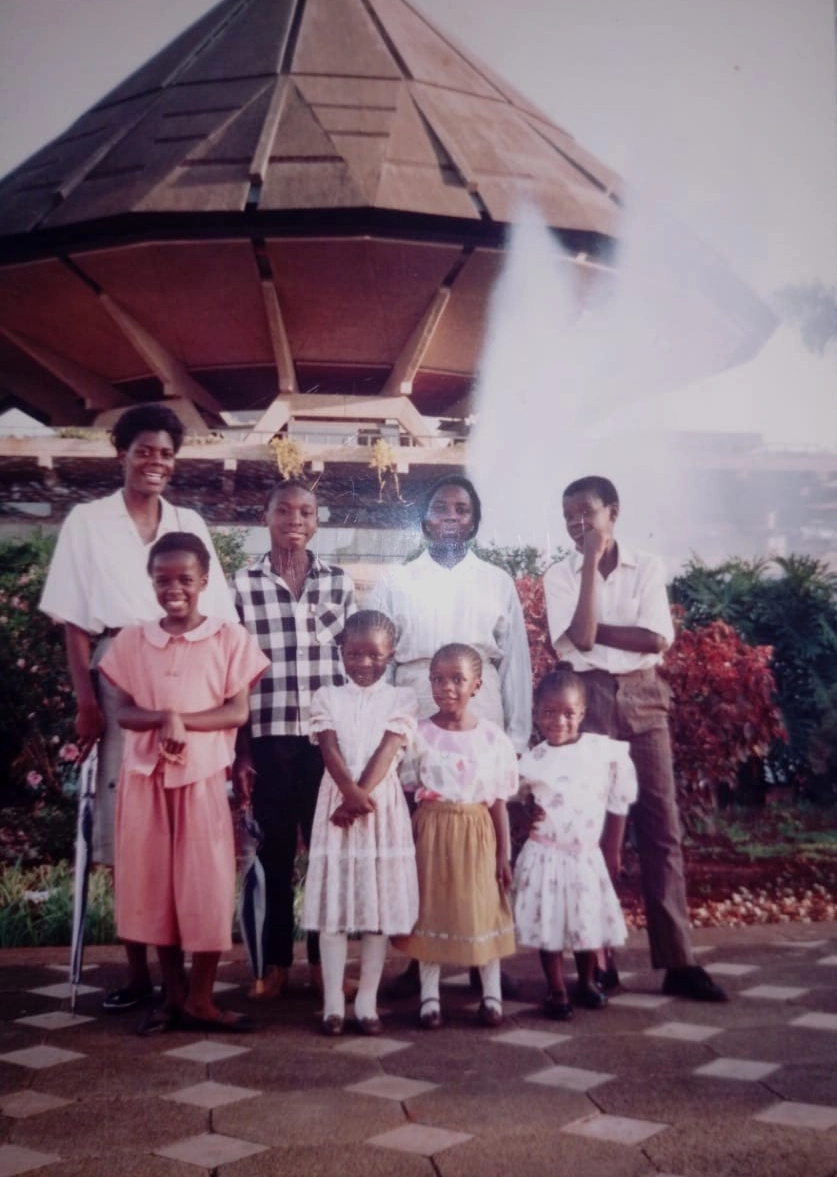
The average Nairobian’s photo album will probably have a few staples, a photo in front of the Kenyatta International Convention Centre (KICC), level two is a photo where it looks like you and the KICC are the same height; at level three you are putting it into your handbag or you are kicking it over, or maybe you and your sibling, or partner, or friend, are pinching its top. Then there is Uhuru park and the set of photos it generates. Preferably these are images by the boats or water features, a fence of bougainvillaea somewhere in the city near the supreme court. Nairobi used to be full of these photo moments and somewhere in the back of my mind I had expected that, since everybody had a phone now, this photophilic nature meant these had to have been the images that appeared, the photos that captured the experience of the city.
So why is it that these trends in photographing Nairobi are as they are? How is it any different from the skyscrapers of New York or Abu Dhabi? Colonialism. The colonial government allocated west and north-central Nairobi, the tranquil higher grounds, far from industrial zones and close to principal services, to European settlers. These places, considered most sanitary with good views, birthed the narrative of Nairobi as the “Green city” and the “Safari capital”. They are generally considered the leafy suburbs (ubabini) and provide the majority of scenes of Nairobi that are photographed.
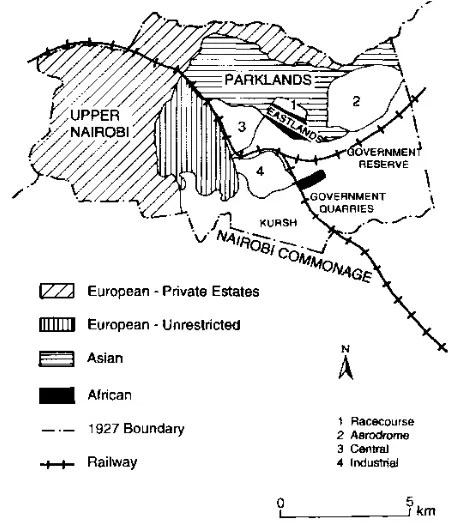
The north-central areas, those closest to, and part of, the central business district, were occupied largely by Indians creating a border between European neighbourhoods and African “settlements” which were mostly in the far-eastern (south-west and south-east) Nairobi. These “settlements” were also the industrial areas, as we were considered temporary residents of the city here, only to work before returning to our families in the countryside/ reserves. The parts of Nairobi originally allocated exclusively to ex-military natives, with a city budgetary allocation of 1-2% and poor resources, thanks to the 1914 Public Health Ordinance that constructed the notion of inherently unhygienic races to demonstrate the racial inferiority of non-europeans, are only ever in photos when its Aid related, NGO related, or whenever Vivienne Westwood feels like doing a photo shoot at a landfill.
So why is Nairobi’s photography stuck between these two spots; development and Aid? Where is the Kenyan imaginary in all this? The violence of this city of firsts, the safari narrative, the exclusion of people in these photography or conversely centering when it is Aid/NGO work is that this dichotomy robs us of our complexities and reinforces the colonial ley lines the city was built on. Native “settlements” were designed with poor hygiene infrastructure, and to see that these are the places where locals can be seen in photography only reinforces the colonial ideas that these places have poor hygiene because black people live there. When cleaning the city means pushing people out of it, these ideas of hygiene and race persist. On the other hand, countering narratives of the continent and the country by showcasing buildings and expressways under the guise of “the Africa they don’t show you” only reinforces strange and bewildering ideas of development.
When I bring this up, this unpeopled, development-centred photography of Nairobi, my friend reminds me that his younger brother had been arrested on the potential charge of 'suspicion of terrorism’. He had taken out his phone to take a photo of a building, a reference for an art school assignment, when he was stuffed into the back of a police truck with a few other people arrested for similar reasons, for loitering, jaywalking, taking photos etc. Photographer Msingi Sassis, known for his portraits of Nairobi at night, was arrested a few years earlier on the same charges, his camera confiscated and his life upended. To take a photograph in Nairobi, you need three licences and a police escort (none of which are free or affordable), so street photography is nearly impossible, resulting in photography from Nairobi but rarely of Nairobi. This means the photography that is readily available is the kind that is bankrolled by development agencies, or taken, potentially illegally, at rooftops of buildings, the kind of photography that appeals to a certain gaze and tells nothing of the stories, people, and experiences that make Nairobi the Nairobi. It is not just an all-out ban on photography in the city, it is that the city itself has changed too.
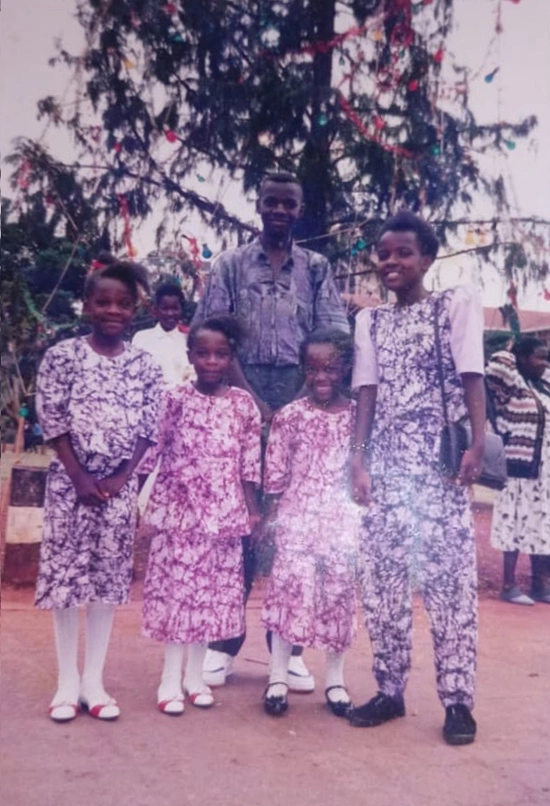
There was a time when the streets of Nairobi were full of people, hawkers, street performers, photographers, men in large groups spiritedly discussing the most important politics of the day, and teenagers on corners waiting for their friends from different areas of the city, so they could go into cyber cafes, movie theatres, or church plays. There was a time when Christmas meant matching outfits and pictures in front of the city’s Christmas tree, when the city belonged to and was populated. It was a brief time of course, because Nairobi was never meant to hold the natives; soon in the name of making the streets “clean”, everyone was pushed out and the colonial “no loitering” signs returned and the few benches where one could sit down and just wait, or think, or take in the city, had signs reading “I refuse to sit here and do nothing” printed on them. What this means now is that if you are going to town, you either meet up in a cafe, or get in and get out. The city has returned to its colonial pace of pushing the natives out of it, making it impossible to take it in at all, even selfies proving too much of a risk. We are, once again, temporary residents, redundant natives who have to prove the legitimacy of our presence in the city.
My friends and I speculate about the August 1998 bombing of the US Embassy, which killed 213 Nairobians and wounded another 4,000, if perhaps that was the turning point. It pushed most embassies out of the central business district to residential areas that afforded higher security/surveillance; and maybe even planted some distrust of town’s safety in the
mind of Nairobians, encouraging a decentralised approach to life. I remember that, at some point, we stopped going to church at the Holy Family Basilica, which was in town next to City Hall and only a few streets from the bomb site, and started attending a church closer to our house for a few years after the blast. I recall how, sometimes, when we went to church at the basilica, I would pretend to go to the toilet and just wander around until mass was almost done, how we would wander around town while our parents talked to their friends after mass. Sometimes we would get a Sunday treat at Wimpy’s. In our teens, the spot we would wait for each other (because not everyone had a phone) was the Nandos/Creamy Inn opposite the national archives in town, time spent at the bookshop on Moi avenue where we did our back to school shopping, Deacons where we windowshopped and then eventually Christmas shopped, the fruit vendors who let us know what fruit was in season by occupying most of the sidewalks, the evening “muinamo” where= we would find second-hand clothes you would have to dig through for something in your size and taste, the running battles with City Council and sunbeams. There was a time where the thing to do at any time was to meet your friends in town and then wander around until you found something to do, a play to watch. I can only speculate what a Nairobian imaginary would look like considering the quiet reinstatement of the wandering Nairobian, the one colonial policies labelled nyanga riika (good-for-nothing natives) has robbed locals of not just interaction but memory and image-making itself with the City under the sun.
I remember a project I started and quickly gave up in the early 2010s, a mapping of the women of Nairobi, one particular picture wasof Nobel laureate Wangari Maathai on top of a building, kitenge flowing in the wind, our version of Batman, watching over the green spaces, over us. I remember trying to take photos of building cranes, the number of times security guards stopped me, or questioned me, and eventually I became too shy to try ever again, to look, to stand somewhere, or think about what was happening to the city, and how it was changing. I hear a lot of frustrations about the city from my friends as summed up in a simple phrase “Nairobi kuna wenyewe” (Nairobi has its owners), which means you can work in Nairobi, you might be able to play in Nairobi, but you can’t live in Nairobi. That Nairobi doesn’t exist anymore due to an almost exact replica of the colonial policies designed for the “redundant native”. In its place is a Nairobi that not even photography can imagine a way out of.
Image above: Zebra in the Nairobi National Park with the Nairobi skyline behind.
1 Lutta, G. (2022, April 19). Viral Post of Nairobi Expressway Sparks Debate in South Africa. Kenyans. Link
2 King, A., Zwanenberg, R. M. A., & Van Zwanenberg, R. M. A. (1975). An Economic History of Kenya and Uganda, 1800-1970. Palgrave Macmillan.
3 In Nairobi, the only natives allowed in the city were those working (and they had to prove what exactly their task was and who had sent them using notes called passbooks, usually worn around their necks and signed from one white master to another. No "free" native was allowed in the city). It is not language that's banned, it is black people, the only exception being when they have been sent by white people to buy things from shops run by Indians, or to help another white person do something. the term used was kinyanga rika, Ki being diminutive, so not just a stupid/useless person, but the equivalent of saying an "insignificant speck on the windshield of my life".
4 The segregation of residential areas in Nairobi, 1909. Mazingira Institute, 1993, p3. (Fig. 9.4) The information presented vavarious aspects of the city of Nairobi in graphs, charts and maps. Paper presented to Nairobi various aspects of the city of Nairobi inonvention, 27-29 July, Charter Hall, Nairobi, Kenya. Link