

Reality Cheque
A lot of things have changed in the past year and despite the constant fear, frustration, uncertainty, and weariness, it appears that on some level change can be a force for good. What was also apparent was that a lot of things didn’t need to change; they actually needed to be smashed to pieces and rethought completely. At least this is the case for the creative industry here in France – I have no extended knowledge or direct experience about the working conditions that my peers living in other countries face.
If you type ‘France’ and ‘Culture’ in Google one of the first ‘hits’ is an article from Business France titled “France, a country worldly renowned for its culture”, followed by another article titled “France possesses an exceptional culture”, after that Wikipedia page for French Culture, and pages and pages of more articles praising France for its ‘exceptional culture, fascinating museums and institutions and vibrant art scene.’ Being a French visual artist who has lived in several countries, I can confidently assert that our art scene is far from vibrant, and culture is far from being a key priority for our current government. The budget cuts to the Ministry of Culture have been drastic. Institutions, museums, and galleries have closed. Artists are jumping through hoops to try to get governmental help they are entitled to. It is quite apparent that in our neoliberal society, we are neither ‘essential’ nor ‘profitable’. It’s all too clear where the status of artists in France stands in 2021, and the lack of consideration the government shows reveals this to us a little bit more every day.
I’ve recently had the pleasure to meet – online of course! – a very inspiring woman who had been working in this industry for decades. During this time she had occupied a broad variety of roles, giving her legitimate oversight of the situation and told me “this is a blessing in disguise, all the things that were crooked will collapse, the future is unknown but we are getting rid of the heavy weights on the way there”. This sentence really shook me as I had been thinking about this for a while now, often finding myself more hopeful than hopeless, in a situation where we would have every right to feel desperate.
Working as a freelance creative put artists at a massive advantage over your typical salaried worker on a 9 to 5 schedule when the pandemic hit. Precariousness, instability, no visibility of the future, working from home, isolated – this stuff is our daily bread. All things considered, when things are this shaky, there is very little left to get shook by. Being particularly resourceful is also a strength someone needs to survive in this industry. And if we need to often rethink how we build and maintain sustainable practices, then we also need to apply that technique to creating a space for cohesive effort, solidarity and, most of all, an effective support system.
As artists, we have various platforms and ways to present our work, but lack initiatives, both as individuals and collectives, that open up conversations about the struggles we face completing the random, boring, and ugly bits of our day-to-day lives. Our practice involves labour, we evolve into, and exist within, a hyper- competitive field that is aggressive and unfair. A field that for most of the time is lonely, and almost all of the time scary. Yet no-one addresses the taboo topics of failure and rejection, something we are all too familiar with.
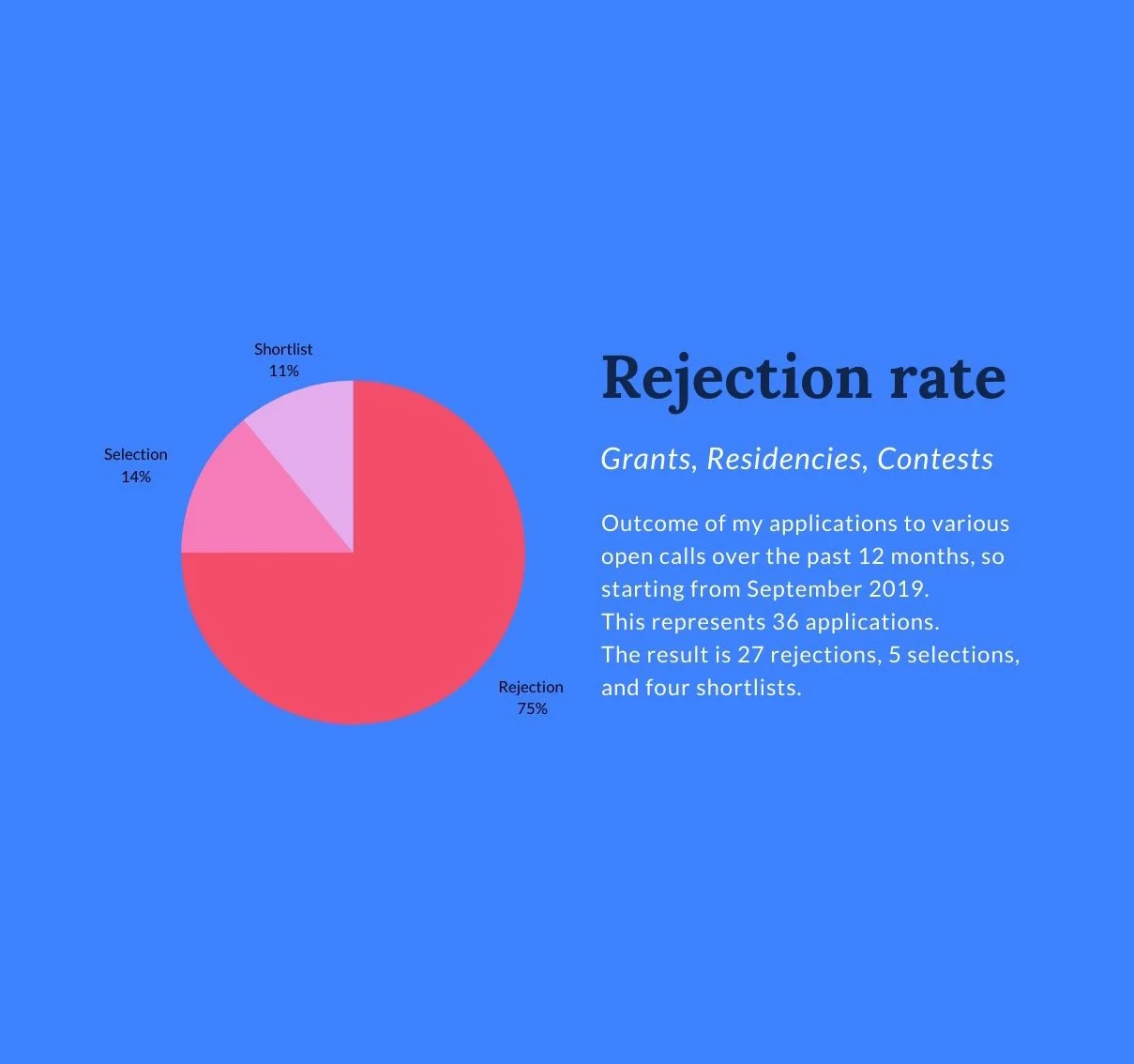
The way we present ourselves matters greatly. We share our success and we congratulate our peers on their accomplishments – even in instances where it reminds us of our own lack of envisioned success. However, we keep very shy about our failed attempts and the rejection we face. In September 2020, I made a list of all the opportunities that I applied for in the preceding 12 months. These were opportunities I directly applied for, excluding any opportunities where I was approached or that organically emerged from new encounters. This covered those instances where I was searching for open calls, reaching out to publishers, spending time writing motivational letters for government funds, residencies, formatting files, selecting images, and on many occasions paying application fees. This list represented 36 applications out of which my work was selected 5 times and another 4 where my work was shortlisted. None of the shortlisted works were successful, giving me a 75% percent rejection rate.
What appears in my news feed and on my resume is the tip of the iceberg of hours and hours of draining submission processes, self-doubt, deception, frustration, and even sometimes a little bit of anger. Our field is hard, hard in the sense of how we treat each other, but mostly how we treat ourselves. We desperately need more discussions about the way we work, how it impacts our mental health, how much we are paid, our financial and social status.
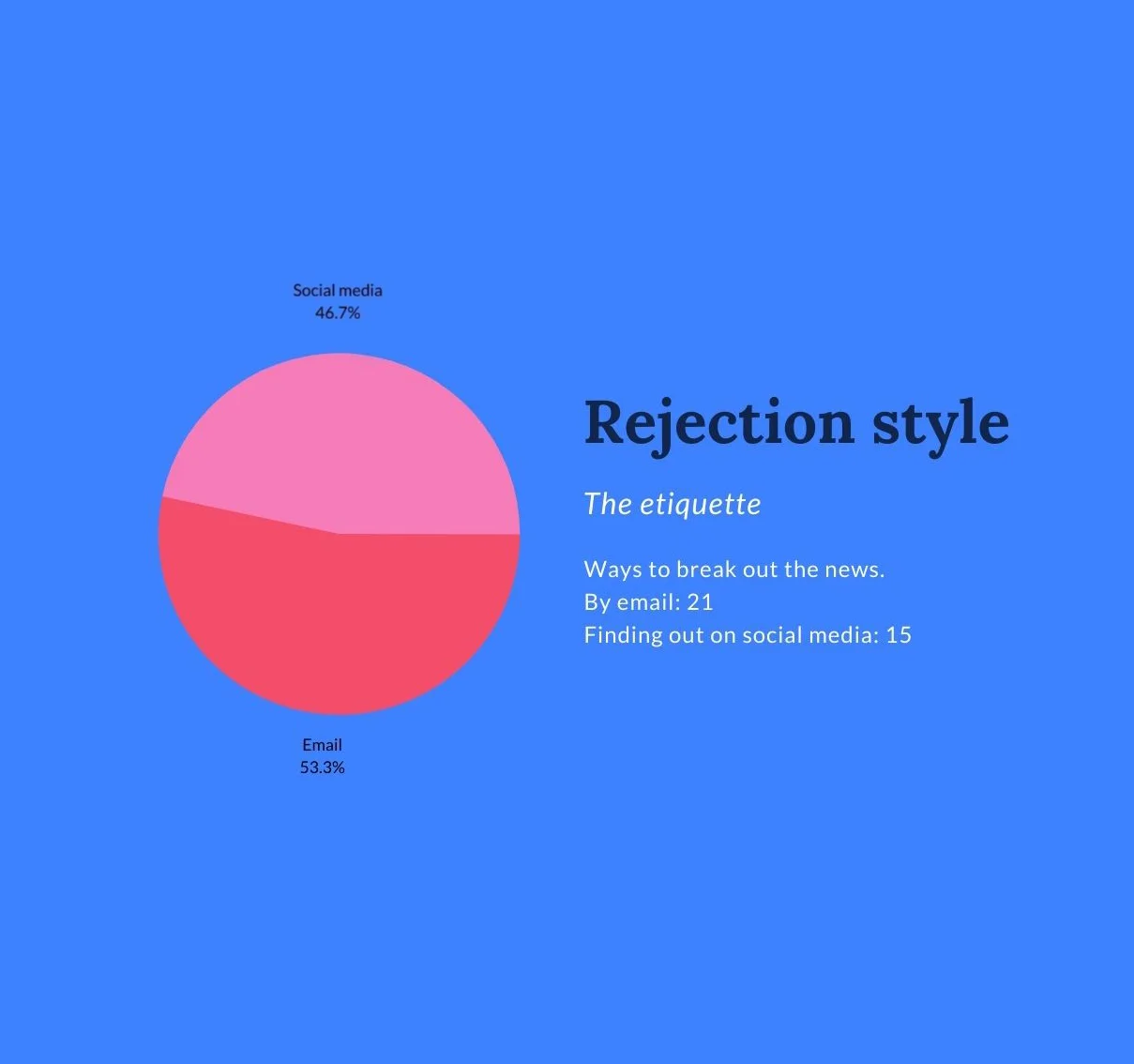
We need to discuss the inequalities, the plagiarism, the elitism, and the nepotism that we encounter. Why are we vocal and caring about many topics but when it comes to our industry we are quiet, allowing ridiculous and outdated taboos remain in place? Why do we never address the lack of consideration we are given? For example, of those 36 applications, 15 times I became aware of the outcome not from direct contact but through social media. If you are part of juries or institutions that hold these types of open calls, I urge you: be more considerate.
Far from complaining and despairing, I hope my tone conveys my resilience and willpower. If everything collapses, from the ashes we can see a new economical system rise. One that is more fitted to meet the needs of artists, a system that is more fair, more inclusive, more efficient, more ethical; one that thrives to live in its time, without the restrictions of an academic and patriarchal system that is corrupted, dented, sterile, and following an overdone vertical hierarchy.
As artists, we lie at the bottom of this vertical line and more and more recently, I have felt this position is being exacerbated. The artist is the disposable link in a value chain involving curators, gallerists, heads of institutions, critics, journalists, publishers, collectors, buyers, and audience (in no specific order). We are supposed to constantly be amazed that we have new opportunities and be grateful beyond reason to see our work published, bought, or exhibited. We must be thankful to be picked amongst thousands, as if our hard work had nothing to do with it.
In 2020, the world gave us a pretty incredible slap in the face and we were confronted with no other choice than to adapt, change, and be introspective. On my part, in front of this immense wave of the unknown, I decided that instead of feeling overwhelmed I would stand up and take action. I radicalised, I unionised, I learned to say no, and finally stopped shying away from feeling like a legitimate actor in my field and began demanding others to treat me as such.
But the idea of legitimacy itself is a delicate complicated concept in this industry. What exactly makes you think you are legitimate? Is it your education, shows, awards, buyers, fiscal status, the approval of your peers, the approval of critics and curators, or your very own? Or is it your fame?
How does one measure that? What are the visible markers of our professional success? What happens when you’re neither emerging nor established? There is this weird step completely blurry, unsettling, and undefinable period in an artistic career that I have been calling ‘The Plateau’. Like an antechamber in which you patiently wait and hope someone will hand you ‘your big break’. Apparently I am there. It is not really something I think about extensively or retrospectively assess when looking back at the state of my career so far. That said, it is something that has been coming back to me lately when I would introduce myself or apply to certain opportunities. I recall instances where I would introduce myself to a foreign curator, and they would remark along the lines of ‘of course I know your work’, like it was obvious and I should have assumed so.
On the contrary, there were occasions where I would introduce myself to a French curator, who was close to my personal network and whose research centres on the very topic I have discussed for years, who exclaim ‘I have never heard of you before’. I have also found myself ineligible for several opportunities in France because, given my resume, I was not an ‘emerging artist’ anymore. I am not established yet and, quite frankly, have no idea how to get ‘there’. Feeling ‘The Plateau’ effect, I applied to a couple of mentorship opportunities and received for both accounts the same answer ‘you don’t seem like someone who needs help’. An answer that left me speechless since the context of my reaching out was specifically for guidance, for help. The same week, I was offered a position of mentor by a foreign school. Being quite fond of irony, I gladly accepted the job.
From a cynical point of view, could the sign of legitimacy within the arts be the moment you start getting paid? At first, these instances were very scarce, but eventually they became the norm. Something that felt like both a personal achievement and a financial relief – although I cannot say all my peers have had the same chance or regard. And, yes, earlier, I voluntarily used the term economic system, because it is still ridiculously frowned upon to discuss the financial aspect of our profession – viewed as being crass and vulgar. In a society where we are timidly debating about universal income and the notion of work as a right, rather than a duty, it’s almost like taking pleasure or personal growth from your work prevents you from getting compensated for it. Thankfully, creation can be intense, beautiful, fulfilling, as it can be painful, scary, anxiety inducing, and, sadly, creation remains maybe 30% of our practices at most – and that is the lucky ones. I myself don’t know any artist perpetuating the cliché of the creator in their studio, working on a new piece for the majority of their time. We’re applying to residencies or awards, replying to emails, sending invoices, working on commissions, updating motivational letters or portfolios, we’re teaching, giving lectures, hosting workshops, seeking funds, taking care of production or shipping for shows or sales, and tearing our hair out over the nightmare that is, in my case French, administration and its system for paying our taxes, just like any other worker, although we are still not perceived as such.
How do you value your work as an artist, if most of the opportunities we are offered are unpaid? Can someone explain to me the concept of being compensated with ‘exposure’ and why there is only one field in which this backwards concept is deemed acceptable? How do you normalise what should be a trivial conversation about money in an industry that feigns to believe that we are ‘above’ the crude banality of paying rent, eating food, and needing healthcare? Let alone living comfortably or considering building a family, that’s another topic for another day. Most competitions in France have an age limit of 35, which doesn’t leave much room to change career paths or consider a family life, and that’s particularly discriminating towards female artists. Earlier, I mentioned a decaying patriarchal system, in France this is definitely one of the systemic inequalities that we have to shatter. In the past few years, a group of women working in the arts have put together a research committee to investigate the representation of male versus female artists in galleries, public collections, and shows. Unsurprisingly the numbers were appalling. I say unsurprisingly, but to be perfectly honest at first I was a bit skeptical because these numbers did not reflect my own experience on the matter, or at least I thought so. Funnily enough, most of my work questions perception and after my initial skepticism, it occurred to me that my own perception was flawed, and that I had been looking at things from the wrong angle.
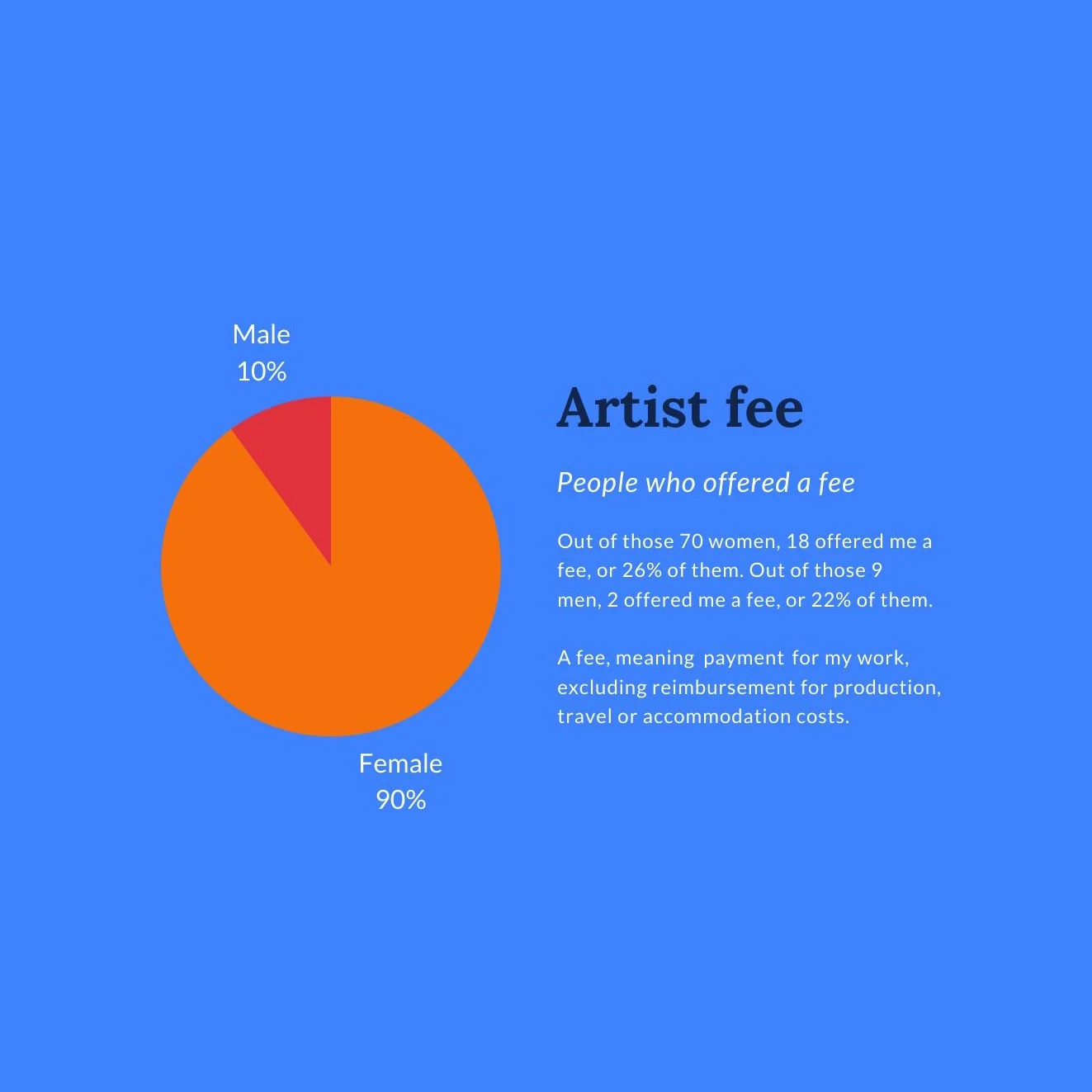
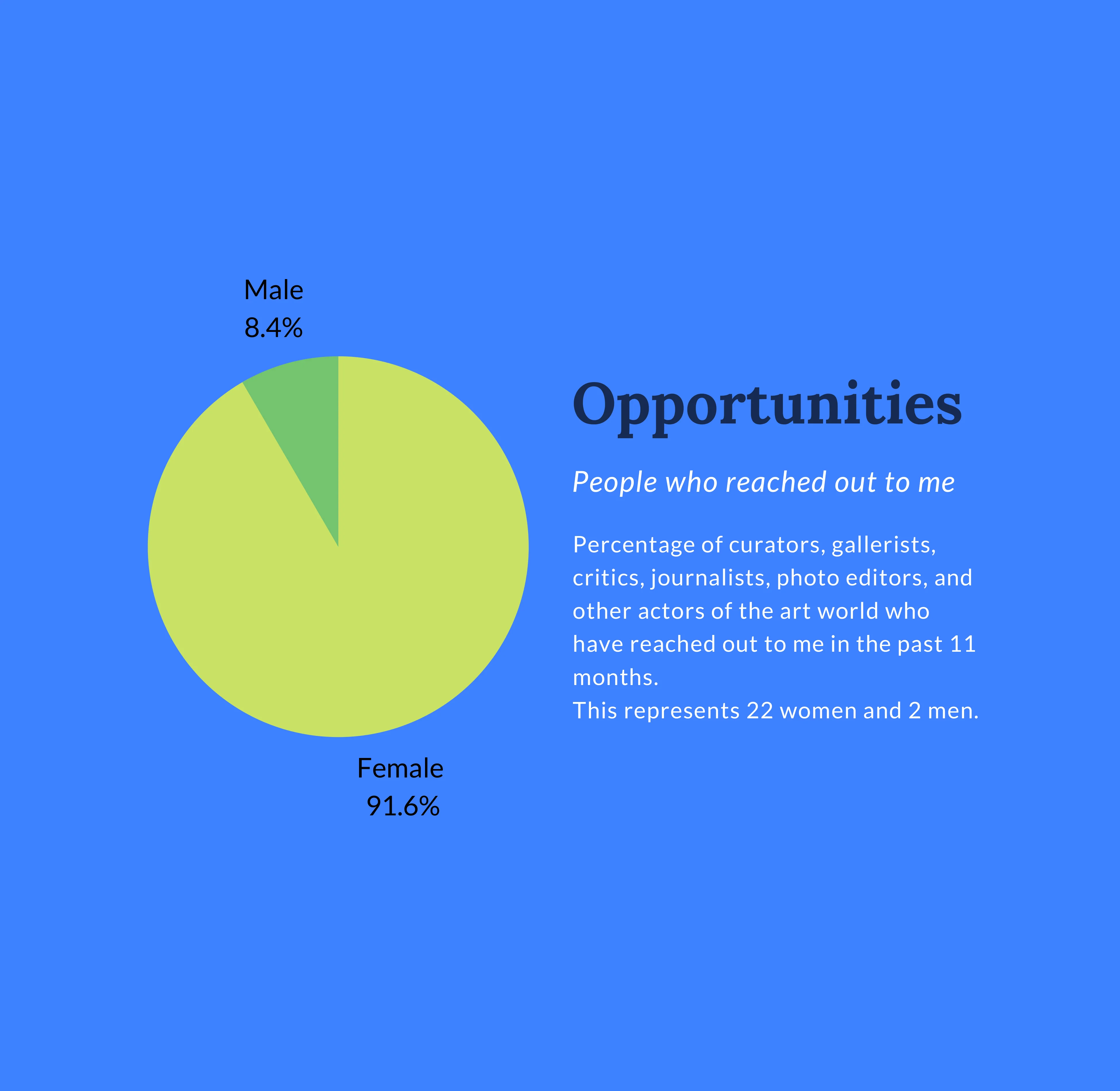
Over the last number of years I have been quite surprised to see the rise in female only and female led organisations in the art world. The way I was seeing it, and it pains me to admit how oblivious I was, women were actually quite present in the arts – they were all around me. I was almost exclusively surrounded by female collaborators. But here’s the thing: this is because they were the only ones reaching out to me. Looking back at five-years worth of collaborations, I investigated the ratio of women to men who had reached out for a collaboration and I almost fell off my chair – 9:1. The numbers had spoken. This analysis was nearly a year old, so I ran it again to see if a change occurred in the meantime. It had: the margin actually widened.
Some things seem to be moving incredibly fast, whilst others seem immutable. What’s not fixed for us can be fixed for the next generation. Chaos can be good, it can bring about change, and we have more power than we are led to think we have. This is a cry from the gut and an urge to unite, resist, improve, stand up, on our own and as a whole.
Show more vulnerability. Failure means growth. The struggle is real. Hang in there.